For the first time, UMW’s self-supported color guard team competes at the collegiate level
4 min read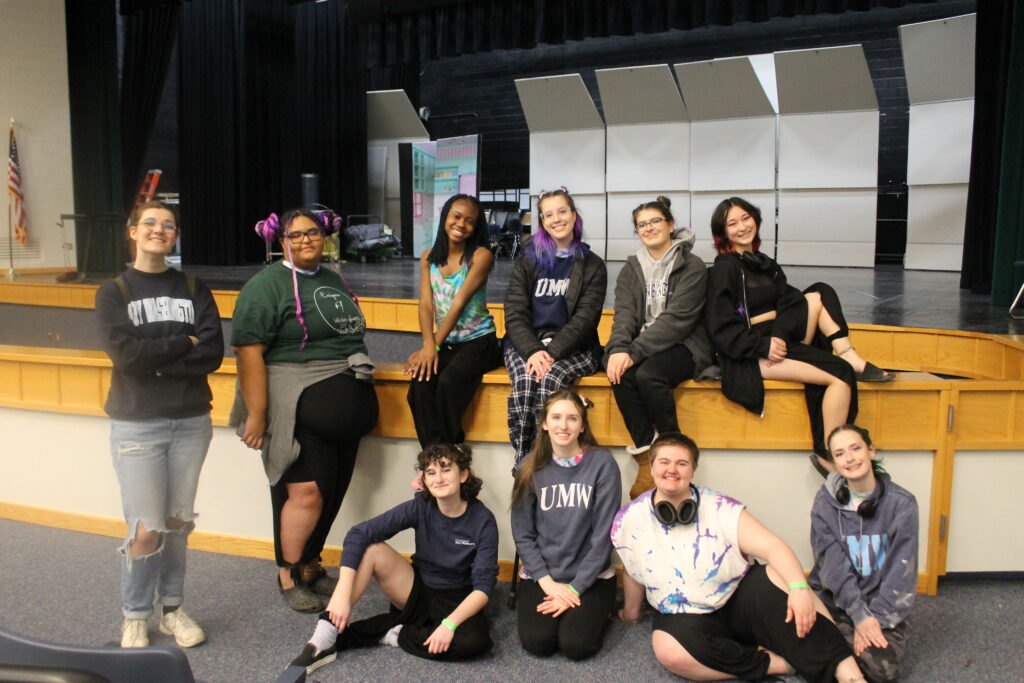
Mary Washington’s color guard, Enigma, is entirely student ran and funded. This is their second competition against other college teams after competing at a lower level the past years. | Ella Cordle, The Weekly Ringer
by ELLA CORDLE
Staff Writer
Clad in mismatched tie-dye t-shirts, the University of Mary Washington’s Enigma Color Guard participated in their second competition of the season on Feb. 1 and achieved their biggest goal: Don’t get last.
“We went up in points, we weren’t last—That’s kind of all that we care about,” said Jo Kammer, a sophomore conservation biology major and secretary, equipment manager and social media manager of Enigma. “We had fun.”While Enigma was founded over 30 years ago, this is the team’s first time performing in the Independent A class.
In winter guard, also known as a type of indoor color guard, there are different classes designated for different skill and educational levels. High schools perform in the scholastic classes, and colleges typically perform in the Independent A (IA) class. Up until last week, Enigma belonged in a class between the two, called IRA, or Independent Regional A. This is a group that colleges are discouraged from joining, generally designed for younger independent teams.
The reason for belonging to this class for so long is Enigma’s categorization as a club at UMW, which is atypical for other collegiate color guard teams.
“We do not have an extensive tryout process,” said Jordyn Anderson, a junior psychology major and president of Enigma. “We take anyone and everyone who wants to join. In other guards you see, it’s an exclusive process. You are cut from the team. You can’t just join without previous experience. We don’t discern in that way.”
Anderson explained that balancing their performance between students who are familiar with guard and students who have no experience is one of the things the team struggles with the most.
“It’s very difficult to write work, to write the choreography in such a way that everyone is satisfied and challenged appropriately,” Anderson said.
Other college guards in the IA class are made up of experienced performers, but Enigma’s open-armed approach to club membership often necessitates a beginner status. Due to this, they are not capable of meeting the intermediate requirements demanded by the IA class.
During the first performance of the season, the winter guard team did not receive the feedback they were hoping for. However, with this being a small competition and Enigma being the only guard that signed up in the IA class, they were able to take home the trophy for first place.
“We got specific feedback from one judge who said we were in the wrong class,” Anderson said. “She said we should go back to IRA.”
However, Anderson and the other nine members of Enigma expressed disinterest in winning by default in a class that was not designed for collegiate athletes. UMW Winter Guard had a newfound determination to earn their place in IA amongst the rest of their college peers.
This would prove no easy task as the stark differences in coaching and funding were made clear. Most teams in the IA class that Enigma competed against Saturday had coaches, captains, intricate costumes, elaborate props and funding from their schools. Enigma entered the competition with none of these. They are entirely student-led, managed and funded. With the members paying for their equipment with club dues. Enigma also choreographs their routines and designs shows on their own.
With all of this stacked against them, Enigma showed up to the competition with a goal to prove these differences did not matter. They performed their routine with little incident and waited anxiously for their results. Their competitors included James Madison University, Virginia Commonwealth University and the University of Virginia, all of whom had double or triple the number of members of Enigma with props and costumes that were more intricate and expensive.
Mary Washington Winter Guard placed fifth out of six schools, which might not seem like much but was enough for Enigma to prove to themselves that they belonged in the IA class among the rest of their peers.
“I think the whole team was just like, hoping to not get last, and we succeeded in that,” said Kammer.
While Enigma could change its policy and only accept athletes with previous winter guard experience, this would go against the mission of the team.
“I’m so grateful to have such a supportive group of people in the guard,” said Ryan Sandson, a freshman Enigma member. “People who are so understanding and who are really welcoming to people with any skill level going into that, and it’s made me feel really at home, and really feel like I can just be where I’m at and grow from there.”
Members have emphasized that the most important thing to Enigma is that they have fun. The show that Enigma is performing for this season ends in a choreographed group hug, proving again how much the team means to each other. Anderson described how the hug was an especially touching moment in Saturday’s competition.
“I think today might have been the first time that we all did that genuinely smiling,” Anderson said.
Enigma’s next performance takes place on March 1, and the team is hoping for more Mary Washington support at these competitions.
“If our listeners or readers want to come see us, they should, because we would love that,” said Isabel Carter, a junior theater major and vice president of Enigma.
Enigma’s wish is for UMW and the color guard world to know that they’re here and how passionate they are about their sport.
“We’re not there to get trophies. We’re not there to be competitive. We’re there to get our name out and show people that we exist and that we have a good time doing it,” said Anderson.