UMW considers turning College Ave. into commuter parking
4 min read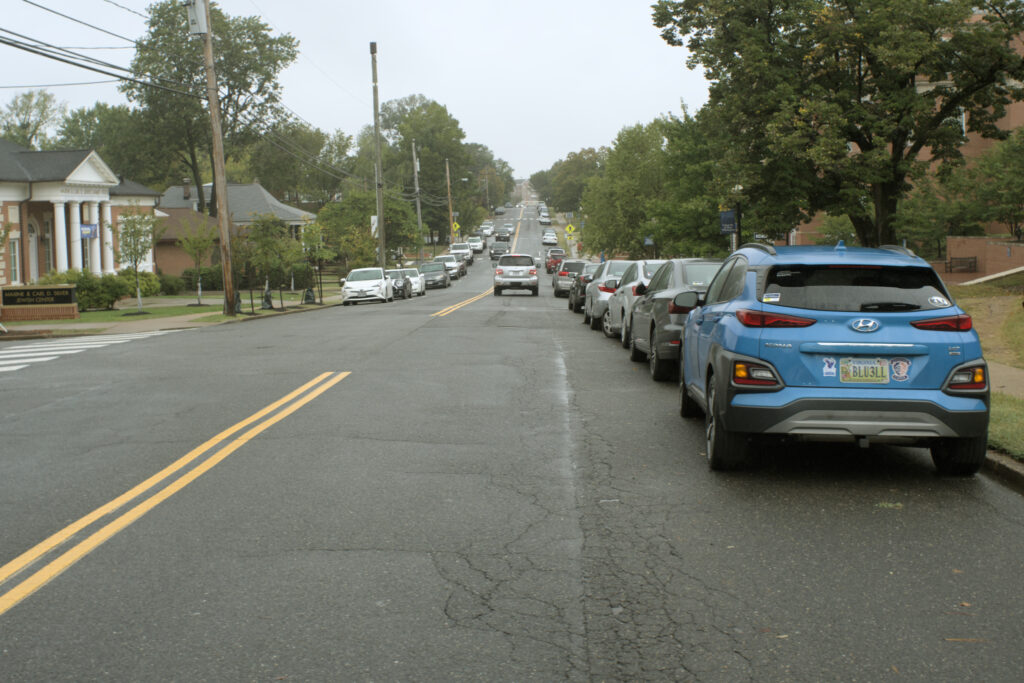
College Avenue is a popular campus parking spot for UMW students, faculty and visitors. | Violet Ayers, The Weekly Ringer
by ALBERT DOMINIC SERRANO
Staff Writer
The University of Mary Washington is considering changes to parking along College Avenue, according to Kathryn Sandor, director of Business Services, who says discussions are focusing on whether the street should transition into a designated commuter parking lot.
While the plan has been an ongoing conversation for several years, the UMW Parking Management Office emphasized that no immediate changes will be made and noted that options are still being assessed. The administration is balancing the needs of residential students, commuter students, faculty, staff and community members in order to arrive at a solution that addresses both convenience and fairness.
“Changes to parking on College Avenue are not happening immediately, as we are collecting stakeholder feedback from students and residents who share this area as a regular route to and from campus,” said Sandor.
As UMW evaluates potential updates to College Avenue parking, Sandor emphasized that collaboration with both students and local residents remains a top priority. The conversation also includes input from the Student Government Association, which joined the discussion this summer.
President and senior environmental science major Amira Said confirmed SGA’s role in the discussions regarding possible changes to parking.
“Yes, SGA has been in conversation with Parking Management,” she said. “We are representatives for all students in these conversations, and we have not been notified of any changes so far.”
The renewed attention to College Avenue parking follows the changes in students’ parking patterns. According to Sandor, many members of the UMW community are now parking along College Avenue and nearby streets, as well as in areas not designated for student use. These include retail store parking lots at Eagle Village and various privately owned parking areas close to campus.
The closure of the Marshall and Russell lots earlier this year forced students to adjust their routines, creating new strains on available parking spaces across campus. Parking Management has advised students to avoid using unauthorized lots, warning of potential consequences.
“We advise against this as students may receive city parking tickets for residential areas or for parking in spaces reserved for businesses and could have their cars towed for repeat infractions,” said Sandor.
Students who purchase parking decals are provided with specific information about where they are permitted to park, depending on their residential or commuter status. Sandor emphasized that this system is designed to ensure fairness and to prevent overcrowding in certain lots.
“As students purchase decals, they receive information on where to park specific to their designated decal,” Sandor said. “Conversations with individual students and their families as they arrive to campus and plan their daily schedule can also help students navigate the parking areas.”
Sandor also recommended that students plan ahead and allow extra time to park, especially during peak hours. According to Sandor, the university hopes that proactive communication, combined with enforcement of existing regulations, will reduce ticketing and towing incidents, especially on College Avenue.
College Avenue has historically served as open parking for campus visitors, commuter students, faculty and staff attending classes, events or work obligations. However, the university has expressed concern about residential students leaving their cars parked on College Avenue for long periods of time.
“We advise residential students who may leave their car parked for hours or days at a time to utilize the residential student parking lots,” Sandor said. “Please be considerate of those who may be coming to campus for a visit or for a short period of time.”
This ensures that spaces remain available for visitors and commuters who need them for limited periods.
Madison Lawhorn, a junior communication and digital studies major who commutes to campus, says that transforming College Avenue into commuter-only parking would relieve stress for off-campus students.
“I think the university should consider making College Ave a designated commuter lot because it’s a central location that would greatly benefit those who travel to campus daily,” she said. “I currently struggle with finding parking because they are either too far or always full by the time I arrive, which adds unnecessary stress and makes me late for class or having to arrive early. Expanding accessible commuter parking would make a huge difference for many students.”
There have been raised questions about whether the conversion of College Avenue into a commuter-only zone would inconvenience residential students who rely on the street for overflow parking. Others worry about enforcement and the possibility of stricter ticketing policies.
Said reiterated that SGA’s role is to ensure those concerns are heard, and encouraged students to voice their concerns through existing SGA channels.
“If students have any concerns on this topic, they should feel free to fill out our Eagle Concerns form or attend a senate meeting that happens every Monday at 8 p.m. in CRUC 314 to express their concerns,” she said. As conversations continue, students can stay informed on parking changes through the university’s Parking Management website and follow updates from SGA.
Thomas Jackson contributed to reporting for this article.