The gym is more than a resolution, it’s a lifestyle
4 min read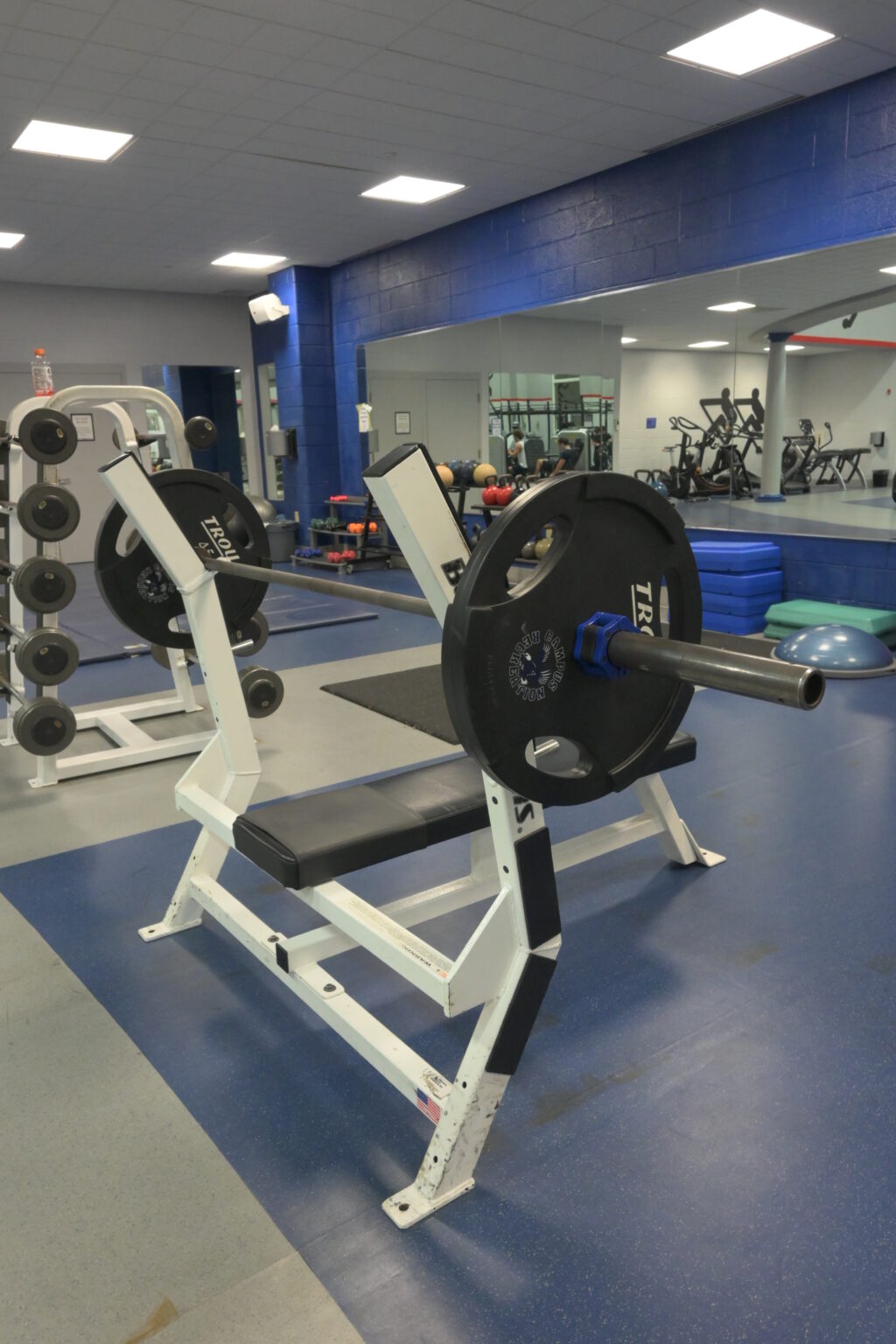
Every January brings a flood of temporary gym-users: students whose New Year’s resolutions fizzle fast. | Anna Goodman, The Weekly Ringer
by AVA NJORE
Staff Writer
New year, new us, or so we like to think at UMW. With a new spring semester ahead, students want to put their best foot forward: new classes, new schedules and maybe even new goals. But the real question is whether we can actually keep those goals? Or are these goals just quick hits of self‑validation, little promises we make to feel good in the moment, even though we know we won’t keep them?
For the past three years on this campus, I have observed the cycle of college students’ New Year’s resolutions. They are often half-hearted and don’t last long, inspired by TikTok wellness trends rather than the desire to achieve real change. One of the most significant examples of this, and the one that affects me the most, is the influx of resolution gym-goers.
Every January, UMW’s gym transforms into a crowded stage for “New Year, New Me” performances. This short-lived, disruptive surge exposes how the university’s lack of long-term wellness support fails students and drives an unsustainable fitness cycle.
The too-small gym and lack of long-term fitness programming at UMW create a chaotic three-week surge instead of supporting real, lasting fitness habits—demonstrating that the issue lies in the university’s approach, not in student motivation.
For students like me, who have been working out and weightlifting for years, it is a cyclical and predictable disturbance.
Hear me out, I am all for self‑improvement. But when I’m elbow‑to‑elbow with someone doing their first-ever squat during my routine gym trips, it can be hard to feel supportive.
I have been a consistent gym‑goer since the fall of my freshman year. Since then, over the past two years, I have watched this January cycle unfold. The gym is packed, people are waiting around for machines, it’s basically a Lamaze class on the stretch mats and the cardio area feels like the Hunger Games.
But I take a deep breath, knowing most of the January crowd will disappear by February. The lack of routine and discipline makes it difficult for these new people to keep up once the “New Year, New Me” energy wears off.
It is not that I am anti‑new people, it’s that I don’t like the UMW system that turns wellness into a trend. But why is it this way? It’s deeper than “the gym is crowded.”
The UMW gym has an odd layout, which makes the space naturally feel cramped. It is 19,000 square feet of good intentions and bad layout. On paper, that space could fit a few hundred people. In reality, it feels full the second a lost freshman walks in.
The two big strength rigs sit dead center like towers, blocking every possible walking path. The dumbbell area and stretch mats are basically pressed against the mirrors, so even with two people, it feels like you’re lifting inside a broom closet. Make it 10 people, and suddenly you’re in a “who can get out of here faster” challenge.
Then there’s the back of the gym: the squat racks and Smith machine are squeezed so close to the windows you can practically fog them up mid‑rep. Because the bathrooms are placed in the back corner, directly in the walkway of the squatting mats, every stretch feels like I’m dodging a stranger stepping over me on their way to pee.
We students are paying to be here. Using campus amenities shouldn’t feel like a competitive sport.
But the more I think about it, the more I realize the problem isn’t the students—it’s the system. UMW doesn’t offer enough structured wellness support.
Now, we do have the UMW Recreation Center fitness classes offered every week. But they are passive, short-lived, 45-minute to an hour classes that do not help beginners build routines that last until February. Students also must pay a fee of $25 for the academic year or a $5 drop-in fee per class, paid at the gym front desk on top of tuition.
There is no long‑term fitness‑related support from UMW. No extended fitness programs that are marketed beyond the gym. Sure, the gym’s Instagram page features a few 20-second videos with the newest TikTok trend that occasionally gets a few glances—maybe even a chuckle—but it doesn’t motivate anyone to actually show up.
A long‑term program is what students need to get into fitness. Learning information like how to rack and unrack a barbell, gym etiquette, learning what weight works for you, progressive overload, making a split, etc.
These classes could be a great way for students to slowly start their fitness journeys instead of jumping in the deep end and disrupting seasoned gym‑goers.
But we do not have that, so by February, the giant January fishbowl always shrinks into a much smaller school of fish, because most of the New Year swimmers can’t keep the pace.
Entering any fitness journey is great, and January is an understandable start. But UMW is unintentionally creating this boom‑and‑bust cycle for students wanting to get into fitness. Thus making gym-goers, like myself, lives much harder.
I would like to see some change as this semester goes on, but my money says that by Feb.1, I’ll be back to my quiet gym and no lost wandering eyes. And I’ll double bet it will happen all over again come January 2027.