Speak up: silent students make Zoom class harder
3 min read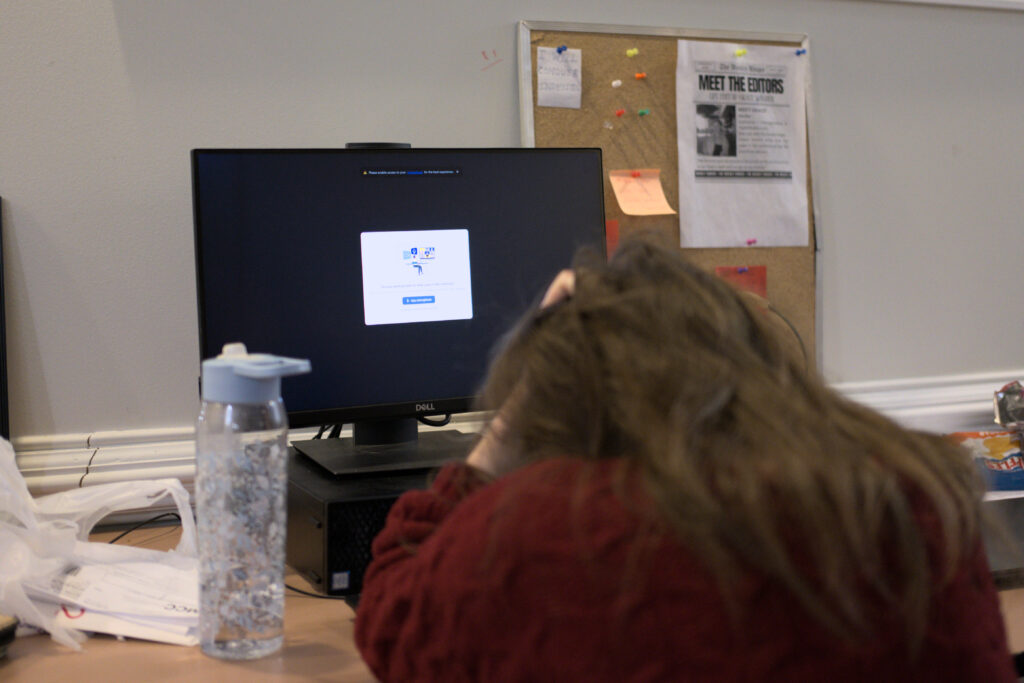
Between technical difficulties and disengaged students, Zoom classes are rife with frustration. | Violet Ayers, The Weekly Ringer
by CAROLINE PREUSS
Staff Writer
After the snowstorm and icy roads affected campus last week, many classes at UMW moved online. While not every course moved to Zoom, the sudden changes left students unsure of what to expect. Instead of a pause from coursework, many students logged onto Zoom links, muted their microphones and adjusted to virtual learning once again.
For some, the week felt uncomfortably familiar. The return to Zoom brought back memories of quarantine, when classes existed entirely through screens and instructions often felt unclear or inconsistent. What might once have been a snow day quickly became a full academic week conducted through screens.
Online classes are often criticized for being boring, ineffective, or exhausting and those frustrations are understandable. However, blaming the online format alone simplifies the issue.
While learning through a screen certainly brings challenges, the success or failure of online classes depends just as much on student engagement as it does on the technology being used.
The difference between online and in-person classes becomes noticeable almost immediately. Technical issues interrupt lectures, internet connections lag and conversations feel less natural.
Professors may ask questions that would normally generate discussion in a classroom, only to be met with silence. Even with many students logged into a Zoom call, the lack of visible reactions and responses can make the class feel disconnected and impersonal.
Part of the problem is that online classes are often structured too similarly to in-person lectures. A format that works in a physical classroom does not always translate well to a virtual one.
Sitting through a lecture on Zoom requires more intentional focus, and without the physical presence of classmates and instructors, it becomes easier to lose attention. Many students scroll on their phones or mentally check out while remaining technically “in class.”
However, blaming the online format alone ignores an important factor: student disengagement.
Many students enter online classes already expecting them to be boring or unproductive, which leads to lower participation from the start.
Cameras stay off, microphones remain muted and interaction is minimal. This lack of engagement then creates the exact environment students anticipated.
Participation in online classes can feel more intimidating than in-person participation. Speaking up on Zoom often feels like announcing your thoughts to an entire room at once, rather than contributing naturally to a conversation.
Awkward silences feel longer, and it can be difficult to tell how others are reacting. As a result, fewer people speak, discussions stall and the class becomes less engaging for everyone involved.
This creates a cycle. Online classes feel unengaging, so students disengage. That disengagement makes classes even less engaging, reinforcing the idea that online learning simply doesn’t work. Over time, this cycle lowers expectations for online instruction altogether, making it easier for students to justify minimal effort and participation.
Teaching online requires a different approach than teaching in person. Simply transferring a lecture to Zoom is often not enough to keep students engaged.
Online classes tend to benefit from more interactive elements, such as breakout rooms, small group discussions or activities that allow students to participate without speaking in front of the entire class.
When instructors adapt their teaching methods to the online format, students are more likely to feel comfortable engaging. Still, even the most thoughtfully designed online class cannot succeed without student involvement.
No amount of interactive tools can replace genuine participation. If students log into class expecting to remain silent and disengaged, the learning environment will suffer regardless of how well the course is structured.
If students want online classes to feel less draining and more meaningful, participation has to be part of the solution.
That doesn’t mean every student needs to speak constantly or feel completely comfortable on Zoom. Small actions like responding in the chat, turning on your camera or contributing to group discussions can significantly change the tone of a class.
When more students engage, discussions become more dynamic and the class feels more like a shared experience rather than an obligation to sit through.
The snow week made it clear that online courses are likely to remain a part of college life. Weather-related closures, accessibility concerns and flexibility needs require Zoom classes.
Treating online classes as something to endure or ignore only guarantees that they will continue to feel frustrating and ineffective.
If students step up and take a more active role, online classes may not transform into an ideal experience, but they can make them more productive and less exhausting.