Meet UMW’s campus cats for International Pet Day
4 min read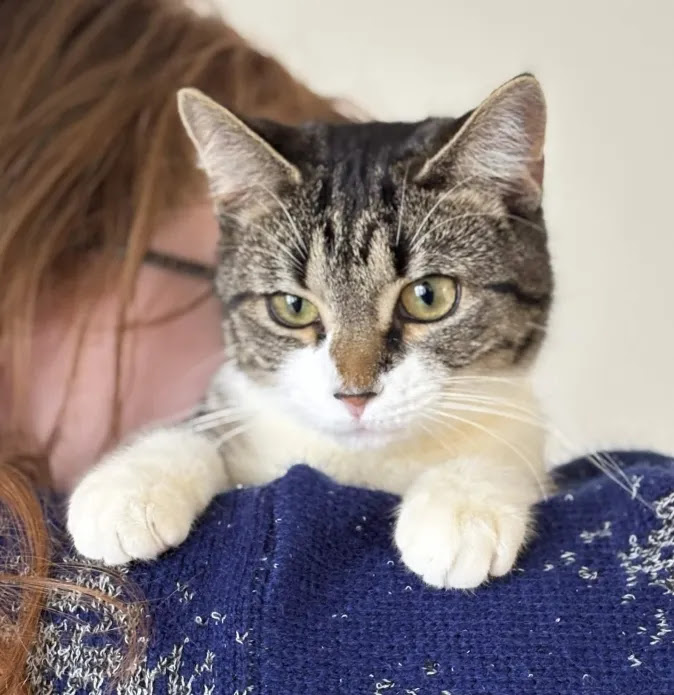
Meet all the cute cats that live within the student dorms. Nicoletta is known for her inquisitiveness. | @if.onlymedia / Instagram
by HORTENSIA NGANDU
Staff Writer
College can be chaotic and unpredictable, but for many UMW students, a little support goes a long way.
Cats have a particular reputation for being low-maintenance and requiring less attention than many other animals, like dogs, making them great candidates for life in dorms and apartments.
According to the Office of Disability Resources and the Office of Residence Life and Housing, 34 cats are currently registered as Emotional Support Animals on campus, meaning they are a popular option among students.
With International Pet Day approaching on April 11, cat owners reflect on their experiences with their furry friends on campus.
Meet Tito:
In 2018, Quiann Sun, a sophomore biochemistry major, and her family adopted their cat, Tito, when he was a kitten. From Massachusetts to New York, to Virginia, Tito has followed Sun as a registered Emotional Support Animal.
“My home is where Tito is. We’ve always had a strong bond,” said Sun.
According to Sun, Tito has a friendly and smart personality, showing awareness of human behavior and body language. However, Tito is also somewhat rowdy.
“Every time I sit down to study, he’ll come and bite all my pens and sit on my things and break things again! He just wants love, and I always cave,” said Sun.
Having Tito on campus hasn’t been without its challenges. Sun explains that Tito’s attachment anxiety would cause him to meow nonstop.
“[He] would meow for a long, long time once I would leave my dorm,” said Sun.
Sun lived on campus with Tito for two semesters until deciding to move to off-campus housing.
“He does best when he feels safe in the whole house, which is a large part of why I moved off campus,” said Sun.
Now living with her boyfriend, she admits that having another person to care for Tito in the household is helpful.
Overall, Sun appreciated living with Tito even while on campus.
“Obviously, the pros outweigh the cons, or else I wouldn’t have brought him all the way from Massachusetts,” said Sun.
Meet Lucifer:
Auden Thies, a sophomore psychology major, adopted his cat, Lucifer, prior to transferring to UMW in the fall of 2025.
Lucifer has been trained to alert Thies whenever a medical episode is about to occur.
“He’ll circle around me and meow and get me to sit down,” said Thies.
Among the tricks he can do, Lucifer is also leash-trained and enjoys going on daily walks.
Thies described Lucifer as being food-motivated and very affectionate, but having bad social cues with other animals.
“He loves to try to befriend everyone by getting directly in their face and giving what I call kisses,” said Thies.
Despite Lucifer’s escapades with other animals and his aversion to baths, Thies echoed Sun’s assertion that his experience with Lucifer on campus has been completely worth it.
“For the most part, he’s mellowed me out, when he’s not knocking over his food. I wake up every morning to him laying directly beside me, and he gives kisses and is all cuddly,” said Thies.
Meet Milton:
Max Haussermann, a freshman planning to major in psychology, has had his cat, Milton, for a year and has been living on campus with him since the beginning of the fall semester.
Haussermann explained that Milton is well-behaved and focused in his harness and is very energetic and loud in his space.
“He always wants to say something, play, and he’s also very cuddly. He’s my perfect boy,” says Haussermann.
Having worked with shelter animals beforehand, Haussermann has come to appreciate enrichment in animals and incorporates it into Milton’s everyday life.
“I find it very important to train him with desensitization. So, I’ve been kind of moving forward to try and bring him outside more,” said Haussermann.
This is mostly done by putting him in a harness and bringing him outside for occasional walks and even during fire drills, when they happen.
With the busy nature of campus life, Haussermann found solace in the routine Milton brought.
“Having that kind of routine and something to come back to that I know is waiting for me is hugely important for me,” said Haussermann.
Meet Nicoletta:
Madi Waugh, a senior English major, adopted her cat, Nicoletta Maria–affectionately referred to by Waugh as Momo—in October and officially began living with her on campus over Spring Break.
Waugh labeled Nicoletta as inquisitive and emphasized her explorative nature.
“I call her my emotional stress animal. She serves her purpose by causing me to stress about her instead of, you know, school or life. She likes to cause problems, but she’s very sweet,” said Waugh.
According to Waugh, her routine on campus has improved due to Nicoletta giving her a reason to get out of bed in order to care for her. Generally, she finds it very motivating.
“Before I had her, I didn’t really have a reason to get out of bed early to greet the day and now I have an obligation,” said Waugh.
Waugh shared a fond memory of an inside joke with a close friend, in reference to the Warrior Cats fandom.
“Last week, we had her apprentice ceremony, where we celebrated her becoming old enough to go to Cat War. So she got lots of treats and a lot of celebration from my friends,” said Waugh.
As she continues to raise her, Waugh reflects on the benefits of having Nicoletta in her life.
“The disabilities service here is phenomenal, and so is Residential Life, and I will always recommend it,” said Waugh.