Housing at Mary Wash sets students up to fail
5 min read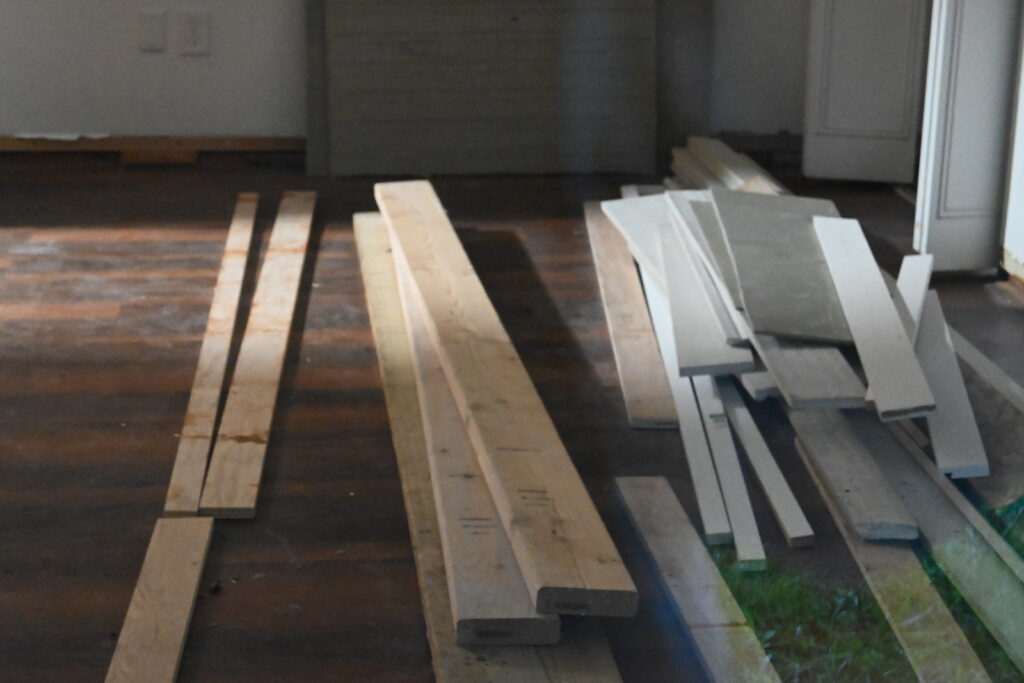
UMW apartment building 8 is actively undergoing renovations, will the endangerment of students persist? | Anna Goodman, The Weekly Ringer
by SALEM SANDERS
Opinion Editor
The email came in the middle of the day, in between classes, without warning. Another student had been assigned to the room originally meant to house only her.
“It just felt like I had no control over my own space,” said Chiara Baez, a junior double major in history and political science.
Housing has been a strain on every student who has ever attended UMW, as the university constantly ignores students’ requests for changes and general fixes. The ongoing neglect of the student body has made me reconsider rooming here.
When looking to enroll somewhere, comfort is one of my top priorities. None of the housing arrangements at UMW seem remotely inviting or cozy.
When trying to navigate the system, the issue isn’t just whether enough housing exists—which is another can of worms entirely—but what that housing actually looks like upon arrival.
Krish Kapoor, a senior economics major, remembers moving into his campus apartment and immediately realizing something was wrong.
“My door hinges weren’t even on when we moved in,” he said. “You need a basic tool set to live here.”
Problems extended beyond small inconveniences. Kapoor described a kitchen where appliances failed in ways that made daily life unpredictable.
“Our dishwasher isn’t even bolted in,” he said. “Every time you open it, it tilts forward. One night I used the microwave and all the outlets went out—including the fridge.”
This should not occur anywhere, let alone a university you are spending thousands to attend.
Kapoor, who is handicapped, said accessibility is another overlooked concern. “There’s one handicap parking spot on each side and neither of them are close to the buildings,” he said. “It’s not practical.”
Other students described similar patterns with problems lingering long after move-in from hasty room assignments. If UMW cannot consider their students’ needs, why should I consider feeding into their housing system?
Emily Ohlinger, a sophomore elementary education major who lives in Eagle Landing, said maintenance issues have become part of daily life.
“Our door doesn’t lock properly and sometimes we get stuck inside,” she said. “Our front door doesn’t always close, which is a safety issue.”
She described a series of breakdowns throughout the year, such as a leaking toilet, a broken heating and cooling unit that took months to replace and a kitchen light that fell from the ceiling and shattered.
“Maintenance said it was installed incorrectly,” she said. “All the wires were fried.”
It has become abundantly clear that the university’s main focus is to ignore and deny until students stop complaining. Living on campus is an abysmal nightmare every semester.
When requests are taken seriously, students say the process can be slow or incomplete.
“The renovations don’t actually fix things,” Kapoor said. “They shut down buildings multiple times to fix one issue at a time.”
In Jefferson Hall, one of the university’s older residence buildings, students describe a mix of aging infrastructure and inconsistent upkeep. Brandon Paulus, a sophomore cybersecurity major, said the building feels outdated in ways that affect daily comfort.
“In the winter, it’s unbearably hot,” he said. “I wake up sweating. And then there’s mold; you don’t always see it, but you can feel it.”
Mold has been an issue here for a while, resulting in the demolition of many buildings that do not adhere properly to health codes. The basics of structure and the foundation itself are heavily disregarded, which worries me for any future constructions.
Paulus also said bathrooms and shared spaces are not repaired sufficiently, showing signs of neglect.
“Towel racks are broken off the walls, showers don’t drain properly and people don’t really clean up after themselves,” he said.
For many students, the stress of housing extends beyond physical conditions to how assignments and communication are handled.
Christian Fleming, a junior business administration major, recalled arriving at his apartment to find an unexpected roommate already living there. “We thought he was a squatter,” he said.
In no way shape or form should we have to feel unsafe in the living situations the university designates to us.
Ainsley Graf, a junior linguistics major, said she and her roommate were initially told there were no available apartment spaces during the first day of sign-ups.
“My roommate is immunocompromised, so we contacted ResLife,” Graf said. “They told us there were rooms, but not for women.”
According to Graf, those rooms were designated for men and she was told that if they remained unclaimed, women might be allowed to take them later. “When we asked for clarification, that’s what they told us,” she said.
Graf said the situation only changed after they escalated the issue. “When we said we would contact ODR, suddenly a room was available for us,” she said.
Experiences like Graf’s highlight inconsistencies in how housing availability is communicated and who has access to it.
Chiara Baez said structural limitations in housing often make these situations harder to resolve. “If you don’t already live in a building, it’s almost impossible to get into it,” she said.
For students seeking accommodations, the process can be especially difficult. Katalina Dave, a freshman, said her request for a single room was denied despite multiple medical diagnoses. “I have sleepwalking, anxiety and depression,” she said. “I submitted all the paperwork and it was still denied.”
She describes the process as frustrating and invasive. “I feel like you shouldn’t have to prove your disability so much,” she said. “It makes you feel ashamed.”
Knowing these problems exist, and as a commuter student, I feel firm about avoiding campus housing altogether. Having control over my living situation is the one thing I know I have for certain. UMW expects students to thrive while attending, but how can that begin if where they are housed cannot operate or sustain them?
Rooms are assigned. Problems are reported. And in many cases, students say, those problems remain unresolved. “They’ll give you a room no matter what,” Kapoor said. “But the question is if that room is livable.”
Sophia Tompkins, Claire Leathem, Katie Hernandez, and Elizabeth Kyne contributed to this article.