Why we love old buildings
11 min read
The University of Mary Washington's campus mainly has a traditional architectural style. Farmer Hall is an example of this. | Abbey Magnet, The Weekly Ringer
The story that UMW’s timeless architecture tells, as told by one student newspaper photographer
by ABBEY MAGNET
Photo & Online Editor
I set my camera’s aperture and shutter speed and tried to find focus as I looked through its lens. I appreciated the red brick, intricately detailed stonework and lavish columns. There are many college campuses I’ve visited that have sleek, modern buildings, and UMW also has a few of those, but I love the historic and traditional architecture that dominates campus. None of those other colleges felt like home the way UMW did. My camera seems to prefer it too.
I’m the photo editor of The Weekly Ringer, the campus paper, and my camera has captured decades of history and allowed me to find the beauty in the oldest of buildings. Not only are these structures striking, but they also provide a sense of familiarity, tradition, warmth and comfort. There is something about the rich history that lay within its beautiful brick buildings and the comforting campus atmosphere that inspires me both artistically and academically.
What had initially been an observation I made to take better photos eventually led me to wonder why I love traditional architecture so much, as opposed to the sleekness of a modern style. Is it because of its rich history, its sense of nostalgia, or just the aesthetically pleasing look? Many people have the same preference I do, and I wondered if the answer had been researched and examined. I wanted to understand it more fully. So I dug into some reading and spoke to professors in the Historic Preservation Department.
As I further my understanding of UMW’s buildings, each answer led to new questions. I turned to the school’s Historic Preservation Department, to a slew of academic texts and to YouTube to further understand how the university maintains its glorious and traditional look with the emergence of new buildings and why others have not taken that route. Ultimately, my research led me to love the old red brick even more because I finally started to understand better why I loved them.
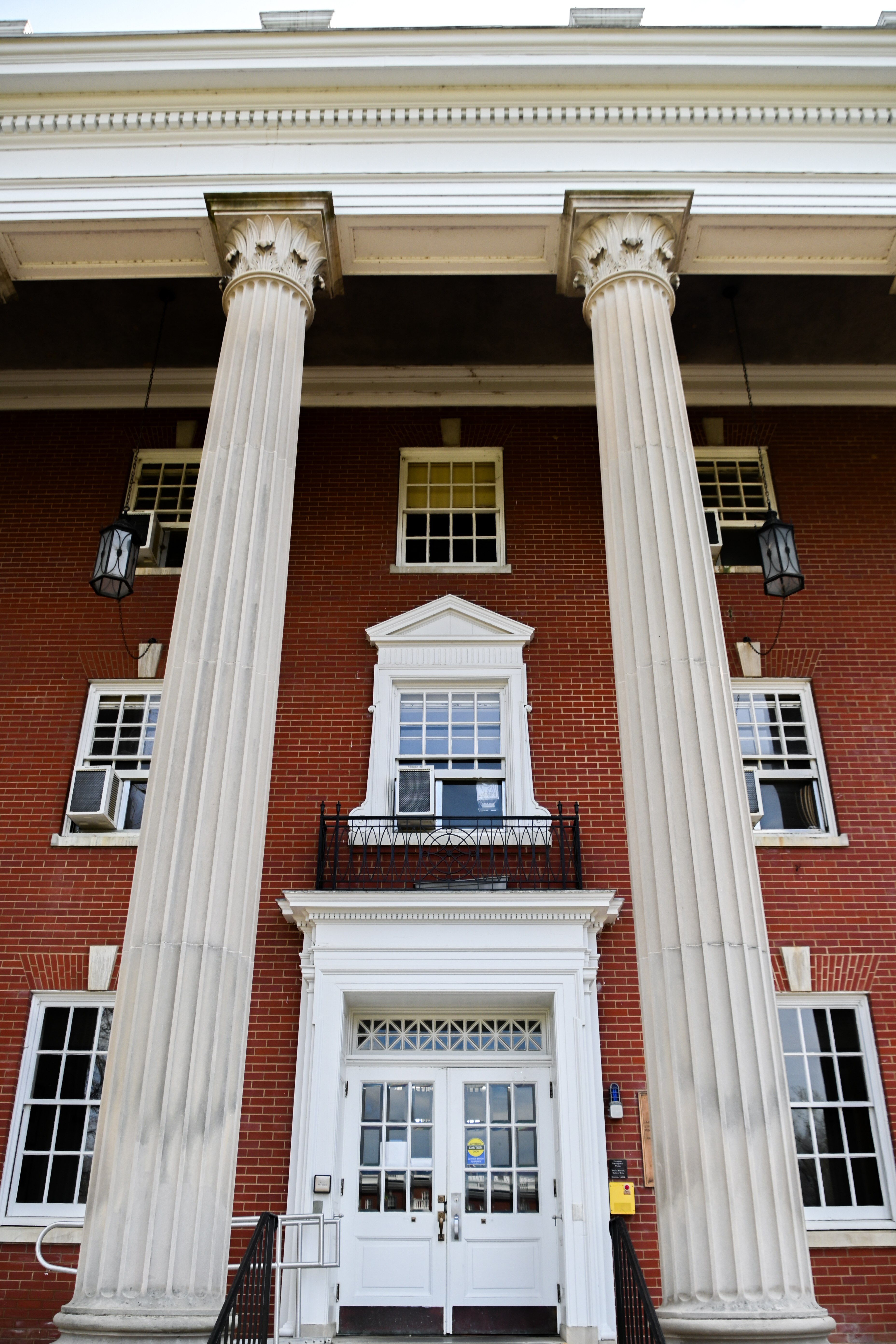
The Department of Historic Preservation plays a significant role in maintaining the historical integrity of the university’s campus when integrating modern facilities. Christine Henry, an associate professor in the department, in particular, has been deeply involved in recent campus renovations, as the designated historic preservation officer. Henry explained that she works with facilities and various departments to ensure that the historical aspect of the university remains intact.
“It kind of looks as if it’s seamless,” Henry said. “Keeping as much as possible, but making sure that they continue to serve evolving needs.”
Henry works as a liaison between various departments during the construction and renovation processes that happen all throughout campus to maintain as much of the historic aspect of each building remains while also understanding the need for progress and upgrades. Henry makes suggestions for various types of materials that the campus should use when renovating current designs or creating new buildings from scratch. Some of these materials include limestone, slate, different types of brick, etc.
Renovation plans for Pollard, Melchers and Dupont are in the works and Henry, naturally, plays a major part in this process. One of Henry’s first meeting’s included challenges based on the site itself. They were able to discuss schematic design, which included how big the building would be and how it would meet the street. She has already had meetings with architects regarding design challenges, like climate control.
“Talking about the arcades that are outdoor arcades right now, and kind of how to make those climate controlled, but still have the same feel,” Henry said.
For any new additions to the theatre building, Henry said that sample materials will be chosen and matched as closely to the original materials as possible to ensure aesthetic cohesion throughout the university. Height is another factor in maintaining cohesion across a campus. Each building on UMW’s campus is around the same height, allowing them to flow together and have a form based design so that no building is disproportionate to any others.
“Generally speaking, our buildings are about three to four stories,” Henry said. “We don’t have a height limit, but that tends to be the height that we use.”
Henry works to maintain the traditional feel and atmosphere of Mary Washington’s campus by ensuring that cohesive materials are used along with preserving as many historical aspects as possible. For Henry, preservation isn’t about keeping things the same, however, but rather it is about the university’s story and how its’ evolved and continues to change for the better.
“And so the other branches then allow people to tell how that’s changed and how generations have come since that and continue to evolve the university,” Henry said. “So that’s kind of, to me, that’s ultimately what preservation is about, it’s about keeping as much as we can that’s appropriate from the past, and then allowing us to continue to add to the story.”
With each architectural project the campus takes on, it has to think about its identity. Each new renovation or construction is a chance to reconsider what the university wants to be. And as the Historic Preservation Department’s considerations show, we are inherently connected to our past. What we have to decide is how we want to consider branching off from it.

Some people prefer the historic and traditional style of buildings, like Mary Washington’s campus has. The campus tends to use red brick and white columns that could be called Jeffersonian architecture or classical architecture. The materials help the university to maintain its cohesive look, which many people appreciate. Though Mary Washington is known for its traditional, yet beautiful campus, not everybody prefers this style.
Dr. Andrea Smith believes that modern buildings are more complex and interesting to look at. In her ideal world, this campus would look much different. Though she sees the beauty within the seamlessness of how UMW fits together, she still prefers the more heterogeneous approach to architecture, with new buildings embracing their newness in starker contrast to the traditional buildings. Currently, even very new buildings, like the HCC and UC are built with materials mimicking the older ones.
“I love complexity in architecture,” Smith said. “I love contrast in architecture. I prefer a campus that’s a little bit more heterogeneous, that has more contrasting buildings, a little bit more weirdness, but that’s not what this campus is.”
Still, she gets why many people prefer the campus to have a singular aesthetic.
“If you look at a campus like Mary Washington, one of the reasons that our university is successful is that our campus is really nice, really livable, really pleasant, has a real sense of place,” Smith said. “If you take that out, well, why come to Mary Wash, right?
Smith agrees with Henry that historic preservation is not about keeping things the same, rather it’s about keeping things viable for the future. Old buildings can’t be used the same way forever; they need to be repurposed as the student population, cultural norms and the layout of campus changes. Farmer Hall, for instance, used to be the library, but it’s too small to be a library today so it’s instead used for classrooms and offices.
While not every student and professor gravitate towards the building and architectural design that UMW has, most can appreciate why people do enjoy the campus’ atmosphere so much. For someone steeped in nostalgia, as I am, the buildings seem to harken back to a time that I tend to romanticize about. Okay, maybe the past wasn’t always rosy, but to me, to build in a way that’s detached from it, is a denial of where we’ve come from. To build in a way that honors the past is a recognition that we are still part of its storyline.
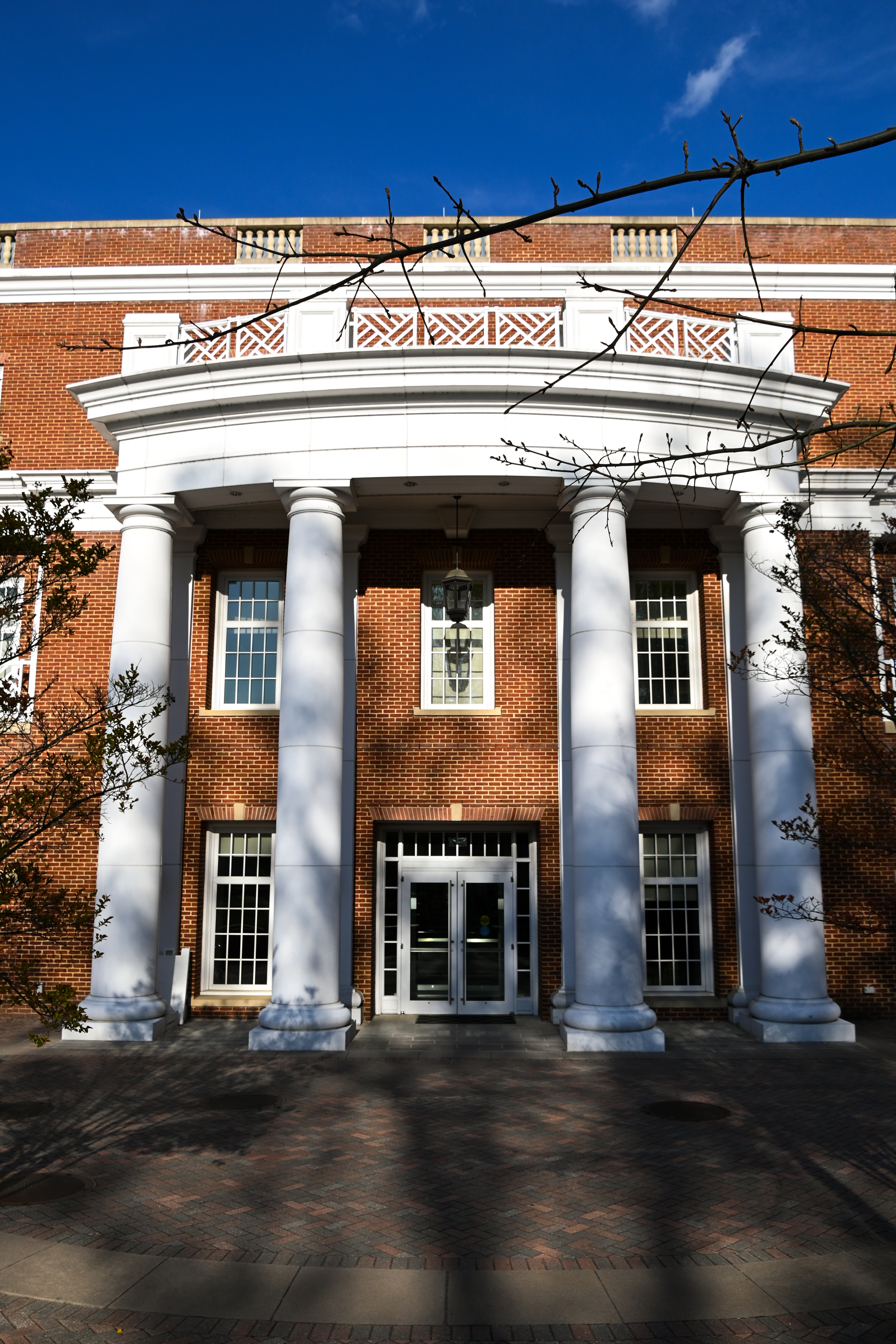
People like Smith, who prefer a more heterogeneous and complex style, are often in the minority when it comes to architectural preferences. As modern designs become more popular with today’s current culture, I began to wonder why people still prefer historic designs over contemporary styles.
Studies have found that most people prefer traditional architecture rather than modern styles. A study conducted by the College of Engineering and Technology, Department of Architecture & Engineering Design used a survey to find out which architectural style people leaned towards. The survey concluded that “overwhelming majority of Americans—more than seven in 10 (72 percent)—prefer traditional architecture for U.S. courthouses and federal office buildings.” Another study found that 84% of people favor traditional architecture.
Traditional buildings have aspects that draw people in in ways that modern architecture can’t accomplish. Traditional styles provide people with familiarity, intricate detail and natural beauty that don’t come with newer buildings. For many people, traditional architecture is the most visually and aesthetically pleasing compared to other design styles. Symmetry is one of the main factors to this. People love symmetry as it provides a sense of harmony, elegance and perfection that our brains find soothing. In addition to symmetry, the intricate detail and craftsmanship draws people into these buildings and designs. Attention to detail is crucial to the architectural design of traditional buildings, from the chiseled columns, to decorative moldings and carved stone. These buildings’ natural and timeless beauty play major factors into why people prefer traditional over modern architecture.
However, these are not the only reasons. These older, more classic buildings provide people with a sense of familiarity and historic heritage. It is the most familiar and comfortable to people, making them feel safe and at peace. This type of architecture reminds people of important traditions that have cultural and historical significance. Familiar designs are going to be the most comforting to people as they know and understand it well. Oftentimes, people don’t like and are afraid of change. Traditional structures feel familiar because they have been used historically. Everybody has seen this type of design and is the most comfortable with it because it is what they are used to.
The last reason for the preference of traditional buildings is that they have stood the test of time. These buildings have been around for centuries and have continued to remain functional and aesthetically pleasing. The use of materials such as brick and stone have allowed these buildings to remain the same with very little renovations. Longevity is especially important when it comes to college campuses since buildings need to be able to support the institution for decades as universities are long lasting.
Modern architecture does not provide people with the same warmth and comfort that traditional buildings do. It can often feel sharp and cold in its designs, ultimately making it less appealing to individuals. Though some people enjoy being challenged geometrically and architecturally, the majority prefer a more traditional approach that gives feelings of comfort and nostalgia.
On the other hand, modern design enthusiasts say that part of the reason people prefer old buildings is simply because of a misunderstanding of the modern style. While some may feel cold or unwelcoming, when done correctly, modern designs illustrate the beauty that can be found within simplicity. Unlike traditional styles, modern architecture doesn’t need extravagant details or ornaments to make eye-catching buildings. It uses simplicity and values form over function.
Much of the new construction I see is not built with modernist principles in mind. Rather, it is focused on maximizing profits and reducing costs, which has little to do with the needs of the users. People confuse these contemporary structures for adhering to modern principles when they don’t. Part of the reason, then, that we prefer traditional structures is because we see so many poor examples of architecture in new buildings. Still, I don’t know if my mind would change if I could see more buildings done in true modernist style.
Regardless, there is no need to tear down old buildings done well, as many of UMW’s old buildings are. Preservation is necessary, and when we need to build new, there needs to be a consideration of the materials and scale of buildings done in the past. UMW’s approach has been to imitate older styles, while other schools have been less concerned with perfect consistency. Which preference we have, I believe, is about whether we want to learn our lessons from the past or look to the future, whether we want to detach ourselves from what came before or whether we can find ways to embrace it, in all its complexity. I prefer the latter.

When it comes to college campuses, students care about the design and overall architecture as they will be spending several years living and learning in the same buildings. Having a sense of familiarity, comfort and nostalgia can make all the difference for these students. Traditional architecture provides this while also being aesthetically pleasing to look at which is why many people gravitate towards this design style as opposed to contemporary construction.
When I first began photographing my college campus, I was astounded by its historic aspects and how effortlessly I was able to capture its beauty through my lens. This led to my love of traditional architecture and preferring college campuses that look this way. Initially, I assumed that my admiration for traditional architecture was simply based on my preference on aesthetics, however, throughout my research I have come to the realization that it is so much more than that.
I used to think that people’s love for classic looking buildings was strictly because of the design. Bur rather, these structures provide people with a sense of history, purpose and nostalgia. They give people a sense of belonging and comfort. As I continue with my research I am realizing that my admiration for historic architecture among college campuses is evolving into an appreciation for how design can influence academics and the learning process. A college campus is much more than just buildings. It’s a place where students engage and learn from each other through the exchange of concepts and ideas. The way a college feels is shaped by not only the buildings, but also the community, design, layout and atmosphere.
I came to see, also, that it is important for college campuses to modernize and develop as needed. Universities change and have to undergo renovations in order to keep up with current needs. Though universities are a time old tradition, it is important for modern campuses to be forward thinking, and how they do so through construction is as important to their stories as their student bodies or alumni relationships. I have yet to see good examples of modern design being mixed with traditional architecture. And maybe for that reason, I still do prefer new buildings that imitate those that are already here.
My studies here at Mary Washington have been motivated by the community and atmosphere that the campus’ design style provides. The sense of tradition that the campus is designed around has given me a home to feel rooted and grounded. Being here on campus, surrounded by years of history, allows me to feel as though I am a part of something bigger and more important than I would be if I was at a university with modern designed buildings.