Commuter spaces are an afterthought at UMW
3 min read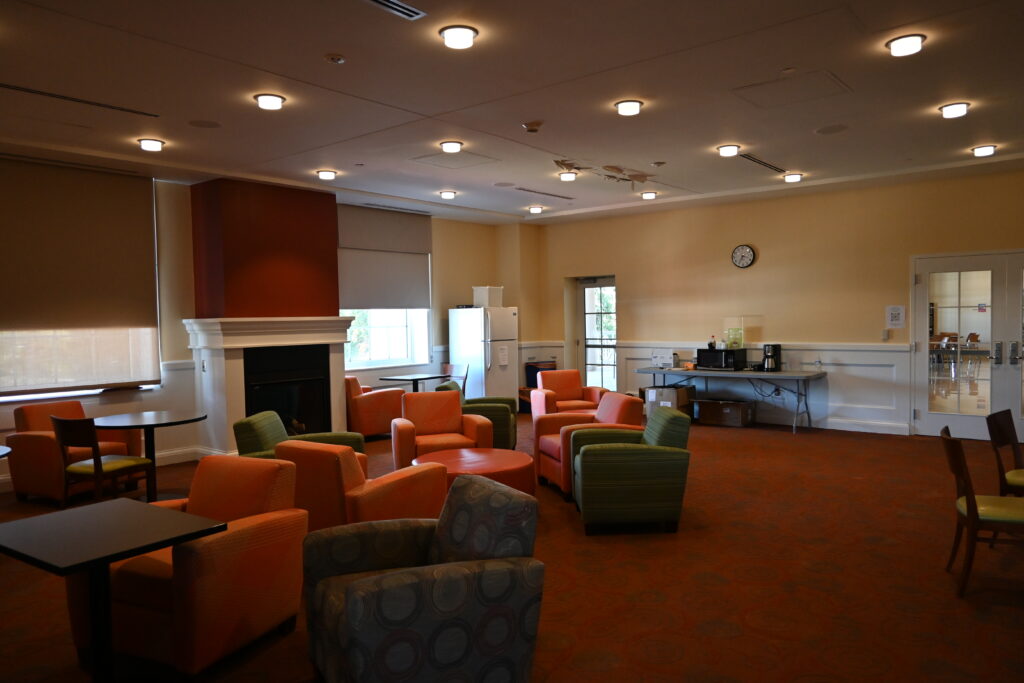
It's important for off-campus students to have a comfortable place on campus exclusive to them. | Anna Goodman, The Weekly Ringer
ZAHRAA MOHAMMED
Staff Writer
The University of Mary Washington campus has plenty of public spaces for both on and off-campus students to work together and connect with each other. These spaces are especially important for commuter students, who have fewer opportunities to engage with campus life and no dorm room to return to between classes. Having a commuter lounge is essential to accommodating off-campus students’ needs, but UMW’s current designated commuter space limits the campus experience and fails to contribute adequately to off-campus students’ time here at the university.
Students live off-campus for a variety of reasons and should not be penalized with a challenging or even unwelcoming on-campus experience. It’s not enough for commuters to be allowed into public spaces on campus. It’s important for them to have their own comfortable space to meet others with similar experiences and build a community.
“Sitting in the same open area for hours isn’t ideal, and without a meal plan, many common spaces feel inaccessible since they revolve around food purchases,” said Hana Abed, a junior commuter student majoring in elementary education. “Unlike students in dorms or apartments, commuters don’t have private spaces where we can comfortably spread out, eat lunch or work without being in the middle of constant activity.”
When commuter students have large gaps in their schedule, it doesn’t always make sense to go back home. Having a lounge with better amenities would facilitate these waiting periods. Additionally, there are public spaces on campus like the Simpson Library and Hurley Convergence Center that commuter students are welcome to utilize, but don’t have the same impact as an exclusive, updated space designed with these students in mind.
As advertised on the Off-Campus Student Services FAQs page on the UMW website, there is a designated commuter lounge on the fourth floor of the CRUC. The description listed reads, “equipped with couches, chairs, tables, a microwave, and other amenities.” However, some students find the space uninviting and unhelpful.
“I tried the commuter lounge once, but it wasn’t inviting or thoughtfully designed. It felt like more of an afterthought than a true student space,” Abed said.
On the other hand, some students don’t expect much out of the lounge itself.
“I come here between classes, get some work done. It’s pretty chill, I can’t expect a lot,” said Kevin Tuffor, a junior business administration major who commutes to campus.
The Link, which is located between Mason and Randolph Hall, is also advertised as a space for commuters. However, it’s currently home to the Office of Undergraduate Admissions Welcome Center, so finding a place to relax can be difficult.
Unfortunately, in the 2022-2023 academic year, the dedicated space for commuters on the third floor of the CRUC, called the Talon Lounge, was cleared and turned into the E-Sport Arena. This previous space created a much more inviting environment compared to the current lounge on the fourth floor. It was spacious and away from University Center activity. If anything, the current lounge feels like a shell of the previous space.
For one, the old lounge had more windows, seating options, a community board and students that actually wanted to use it. Most importantly, it wasn’t directly adjacent to the commotion of the dining hall.
Placing it next to the dining hall might have made it a designated lunch spot, however, commuters seem to need more than just a place to eat on campus, they need a place to build community and decompress.
When asked whether there are any plans in the future to renovate or relocate the commuter space, Assistant Dean of Students CJ Porter, shared that she is always seeking improvements.
“I’m always considering ways to improve the off-campus space,” Porter said. “Right now space on campus is at a premium – hard to come by, especially when you consider it needs to have lockers, a refrigerator, a television and a microwave.”
It’s important to make commuter students feel like they belong and that their experience on campus is important. Having a space dedicated to facilitating their experience and getting them connected is a key part in ensuring that.