Inconsistent EagleFunding engagement inhibits fundraising
4 min read
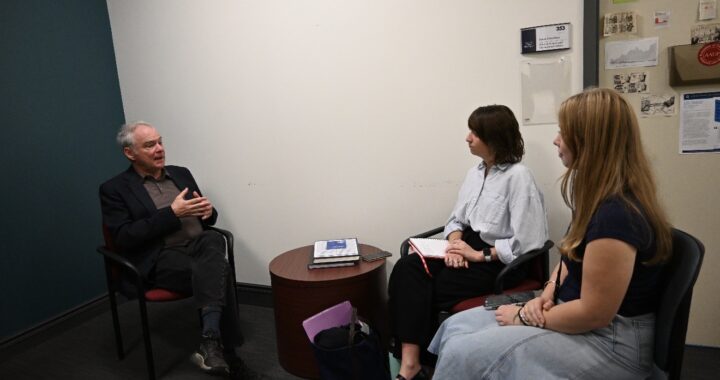
EagleFunding started Oct. 1 for student club leaders. Each club was given a unique fundraising page where students, parents and alumni can leave donations. | eagleeye.umw.edu
by EMMA GREER
Staff Writer
For the past four years, on-campus clubs and organizations have participated in EagleFunding throughout October. The campaign has seen an increase in the number of participating clubs, this year being the largest with 56 participating clubs and organizations.
EagleFunding is a type of crowdfunding campaign, explained Assistant Director of Annual Giving Cadiann Treviño Pinto.
“It’s similar to a GoFundMe; you’re just trying to get a lot of small donations from a large number of people,” she said.
Pinto continued, “The purpose of [EagleFunding] isn’t for these student clubs to try to reach major donors who are going to give them, like, $100,000, but the goal is that it’s accessible for anyone to support the areas that they’re passionate about.”
For some clubs on campus, EagleFunding is a largely successful fundraising tool.
“Honestly, EagleFunding has been egregiously easy,” said Allon Boettcher, a junior linguistics and Spanish double major and co-president of UMW Linguistics Club and treasurer of Talk to the Hands.
Already, UMW Linguistics Club has hit its first $600 goal and is now hoping to gain $1,000, but Talk to the Hands has made very little progress towards its $500 target.
Several organizations are participating in EagleFunding for the first time this year and experiencing success. For example, the UMW Tea Party and UMW Linguistics Club have both already met their original fundraising goals. The UMW Tea Party was even able to make $300 within the first week.
Boettcher mentioned that the UMW Linguistics Club is new this year, meaning they currently have no alumni who may serve as prospective donors. Instead of encouraging past members to donate, the club took a more atypical route to find funding.
“We reached out to a bunch of professors, and the majority of them donated. Not all of them were related to linguistics; some of them were psychology professors,” Boettcher said. “The professors, honestly, were very open to donating.”
Pinto explained that the Administration has seen a gradual change in what groups of people tend to donate.
“In the beginning, it was a lot of friends [donating], but we’ve seen a lot more in other categories,” she said. “We’ve actually seen over the years, in this year, especially, a lot more alumni donors and parent donors.”
According to Pinto, EagleFunding has helped increase engagement of young alumni, meaning any graduates from the last 10 years.
“We know that a big part of the Mary Washington experience is being so involved on campus, so [EagleFunding] was a way to try and target that group,” said Pinto.
The biggest issue with EagleFunding that Pinto shared was a lack of alumni information for clubs to reference when reaching out to donors, because most clubs choose not to keep any records of past members. In the same vein, she said that a lot of clubs stop participating in EagleFunding after the former officers graduate because no one has passed along the funding responsibility or information.
“I believe two years ago, we were number two in how many donors you can get, and this year we’ve only gotten, like, nine donors, which kind of sucks, even though we’re definitely doing a lot more to market this year than we have in previous years,” said Sarah Eshbach, senior psychology major and treasurer of the UMW Tea Party and Lightsaber Duels.
Eshbach blames the campaign’s growing age for decreasing donations, believing that EagleFunding no longer feels new and exciting for students and alumni who have continuously engaged with the annual campaign.
“The novelty is just worn off,” Eshbach said.
She recalled how, in the past, virtually all of the members of UMW Lightsaber Duels donated to their EagleFunding account, yet many of the officers have not yet contributed this time around.
“It’s a combination of a lot of people having less extra finances to be able to donate, and there’s also just kind of a lack of engagement overall on campus,” she said.
According to Eshbach, UMW Lightsaber Duels received the second-highest number of donations last year, raising over $1,000. However, this year, they are struggling to get even 10 patrons to contribute.
“As club officers, we’re all trying to be like, ‘donate, donate, donate,’ and then we just get blank stares from a lot of our members,” said Eshbach. “I feel like we keep saying it and we keep getting ignored.”
She added that student donor numbers have also increased, despite the perceived lack of engagement observed by some club officers.
“They want to access records that they don’t have access to and that we also don’t have,” said Pinto.
Her solution is to promote EagleFunding participation by attending the Student Leadership Summit and Club Carnival, and by providing clubs with helpful resources and advice to be more successful in their campaigns.
“I do my best to try and talk to as many clubs as I can during [those events] and just let them know, ‘Hey, this is happening. We’d love for you to participate,’” said Pinto.
UMW has tried to make EagleFunding accessible for clubs, said Pinto. The only requirements to participate are to be registered as an official club with the Office of Student Activities and Engagement and to fill out a registration form.
“We try our best to reach as many clubs as possible, but because there are so many clubs on campus, we don’t automatically include everybody,” said Pinto. “They have to basically tell us that they want to be a part of this.”