Personal Essay: celebrating black history long after February
4 min read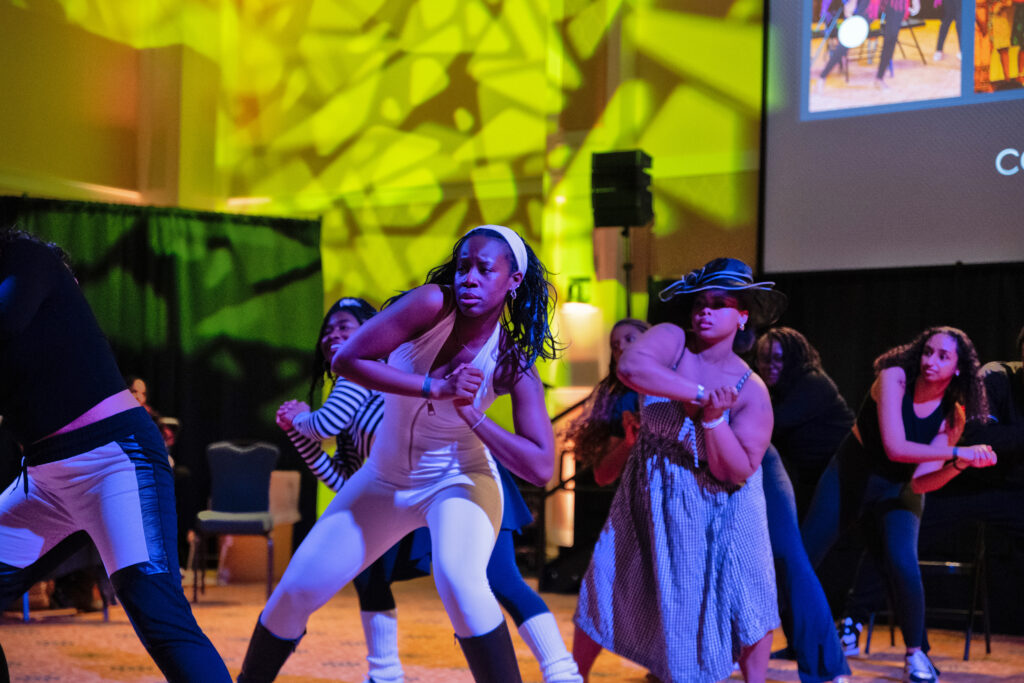
“Colors of Africa” helps Black students find the community essential for any college student. Gathering in Chandler Ballroom, the event gives students a chance to sit among peers to watch captivating performances. | Chloe McCann, The Weekly Ringer
by AVA NJORE
Staff Writer
February is not only a month for love and chocolates; it is also Black History Month—a time to celebrate African American and Black culture—yet here at Mary Washington, that celebration can feel either overlooked or suddenly over-marketed.
As a Black woman at UMW, there has always been a mix of praise and underappreciation; in classes where I can count the Black students on one hand. I’m constantly balancing invisibility with hyper‑visibility.
During Black History Month, those feelings only intensify. I appreciate the food, events and posters, but the sudden burst of attention—decorations, reposts and temporary energy and enthusiasm can feel like emotional whiplash.
The energy is not matched year-round, and that inner tension I had only grew larger over my time here, shaping how I understood my identity on this campus.
In my freshman year, I noticed the campus felt diverse, but the number of Black students still felt small. My friend group was all white, and even though I wasn’t insecure about that, being the only Black girl still made me feel different, like I had something to prove, even if I never said it out loud.
As fall ended and spring began, I looked forward to my first Black History Month at UMW. I wanted to see what the school had to offer, and even though I expected more, I wasn’t sure what that “more” even meant—that was the frustrating part; there was no one to blame.
Eventually, I realized that UMW doesn’t ignore Black students; it remembers us in bursts, mostly in February. Maybe I wanted too much. Then I’d remind myself: this is my college experience, and I’m allowed to make it mine.
By sophomore year, I expected to want more, and I did. I wanted UMW to actually engage with Black History Month, not just put up posters because it was required. I was craving something deeper. I had to accept that the community I was looking for wasn’t going to come from university‑run events—it was going to come from the students.
In my sophomore year, I began making more friends of color and Black friends through a club I joined, the African Student Union. Going around the table and hearing everyone share their name and country made me finally feel so seen and included. The smiles looking back at me, wanting to hear more about Kenya and my life there, gave me a new sense of community and confidence.
After joining, I learned about “Colors of Africa” from ASU’s executive board—a student-led Black History Month event that feels like the heart of our Black community on campus.
Created by Black students, for Black students, the event grounded me and helped me feel more confident at a predominantly white institution. There are sections where club members can join and take part in the event. I always choose to take part by performing.
Wearing our cultural clothing and strutting down a runway has been a highlight of my tenure at UMW. My group dance performance at the event is where I am able to fully showcase my creativity. Three‑hour rehearsals every week, costuming, creating a storyline; everything that goes into the dance is thought out thoroughly.
Every year, our ideas for the group dance blend into one vision, everything falling into place like a hive mind. This year, my performance group created a “Sinners” inspired piece about unity, musical spirits and honoring Black artists and movements from decades past. The piece was really well‑received, and the crowd’s energy gave us dancers the confidence to leave everything on the floor.
For someone used to fast‑paced schedules, being part of this process let me create something meaningful and leave my own mark on UMW, something I’d never felt before as a freshman.
ASU club meetings, the laughter, the games, “Colors of Africa”—they’re the reason Black History Month at UMW is finally meaningful to me.
I feel seen, not just during performances, but long after, because of the friendships I’ve made, the faculty I can lean on and the unspoken understanding between Black students. Together, they’ve given me a real sense of identity and purpose.
What I want for the future at UMW isn’t just for me, it’s for the incoming Black girls who will arrive here hoping to see themselves reflected on this campus. I want to see “Colors of Africa” grow bigger every year, and I want the university to uplift it with the same energy it gives to everything else.
We deserve to be seen and heard openly during this month, not just through reposts, but through real visibility: Students and professors taking part in the events, either joining themselves, or simply attending and actively participating.
My expectations for the university to do more were valid, but I’ve learned that belonging often comes from places you don’t expect. Sometimes it was venting to my African friends in Panera, or laughing through Afrobeats trivia at ASU meetings.
I’ve learned that identity isn’t shaped by a month; it’s shaped by the everyday joy, connection and culture we Black students create for ourselves.