Personal Essay: Expanding global connections on campus
5 min read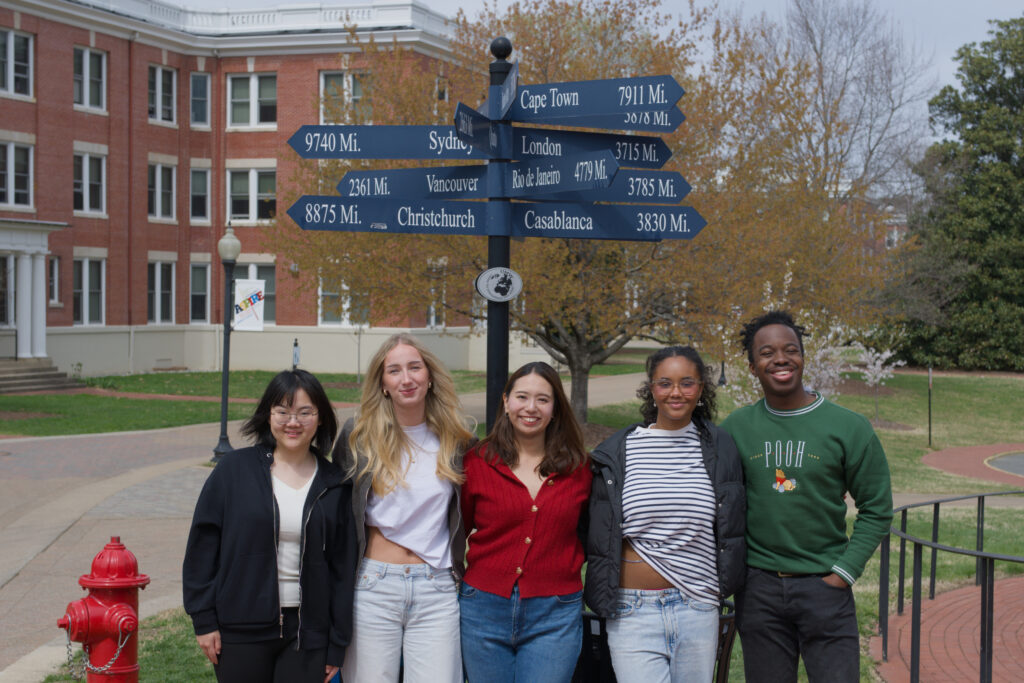
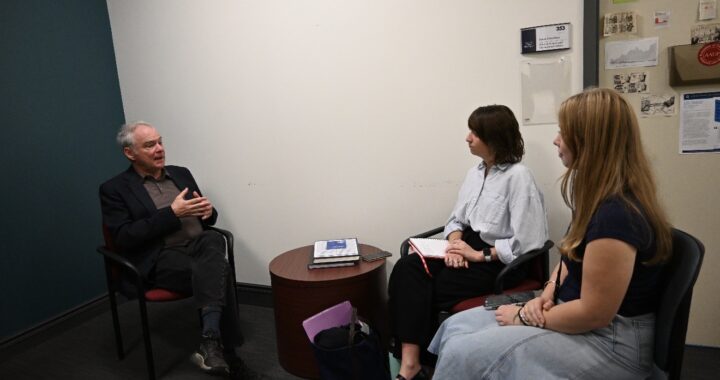
For international students at UMW, adjusting means learning how to navigate challenges inside and outside the classroom. | Violet Ayers, The Weekly Ringer
by AYA OGAWA
Staff Writer
I felt a mix of excitement and anxiety after transferring more than 6,000 miles west to UMW from Japan in the fall of 2023.
I had grown up between Tokyo and Okinawa, two very different places with distinct lifestyles, accents, foods, and cultures. So, adapting to a new environment somewhat felt familiar.
I figured that if I prepared well, I would be able to keep up with classes and participate in English discussions, but in reality, it was a very different story.
Before coming to UMW, I studied at the University of Maryland Global Campus in Japan, where class discussions weren’t frequent, and participation wasn’t heavily graded, as opposed to Mary Washington classes. The differences in the classroom structure made the adjustment much more challenging.
Conversations seemed to move too quickly, and classmates would dive into ideas far deeper than anything I had expected. By the time I figured out what I wanted to say, the discussion had already moved on.
I started to doubt myself. I found myself asking, “Is my opinion correct?” or wondering, “Does this actually match what we’re discussing?” Even when I had ideas, I struggled to express them quickly in English.
But I wasn’t the only one who was struggling. Other international students like Caroline Preuß, a senior from Germany majoring in communication and digital studies, shared my similar sentiments.
“The biggest challenge for me has been adjusting to how different the university system is compared to Germany,” said Preuß. “There are attendance requirements, participation grades, and multiple exams throughout the semester.”
Jeremy Oshunrinade, a second-year real estate finance student from the United Kingdom, shared a similar experience.
“The most challenging part of this year abroad has been adapting to the different education system,” he said. “I had multiple weekly assignments and discussions, which I found challenging to keep up with.”
As Jose Sainz, director of the Center for International Education at UMW, explains, “English is not a measure of intelligence.”
“When [international students] are quiet in class or slow to speak, it is often about processing in a second (or third) language and navigating unfamiliar classroom norms, not a lack of ideas or ability,” he said.
During class discussions, I would listen to my classmates and suddenly realize, “Oh, that’s what the reading meant!” When I’d review everything after class, I would think, “I could have shared my perspective as a Japanese international student,” and would feel frustrated for having missed the chance.
According to Sainz, there are around 100 international students on student-sponsored visas at UMW, and that number has increased since the end of the COVID-19 pandemic.
Sainz also pointed out that many international students face challenges such as high costs, cultural adjustment, and difficulty speaking up in class.
Beyond the classroom, international students face additional challenges in daily life.
“They are balancing UMW life with intense academic, financial, and emotional expectations from home,” said Sainz.
When I lived with my international suitemates, we often talked about how hard it was to live in a different country.
Oshunrinade mentioned a lighter but still noticeable difference.
“A culture shock between Americans and Brits is the sense of humour,” he said. “I’ve had a lot of awkward moments where they wouldn’t understand the humour or ‘punchline’ of the joke.”
Being far from family, adjusting to a new culture, and trying to keep up academically all at the same time can be overwhelming.
“The main difference between my home country and the United States is that it’s harder to get around here,” said Oshunrinade. “I had to rely on others to drive me to places like the bank or the dentist.”
Struggles for international students don’t stop at missed jokes or relying on others for transportation. These challenges extend into social life, where building connections with American students on campus can be difficult.
“It would also be nice if people were a bit more open, especially since many students already have their friend groups, and it can be harder to connect when you’re not a freshman,” said Preuß.
As a result, many international students end up spending most of their time with one another, going out, traveling, or just supporting each other.
We rely on each other when faced with challenges and find comfort in our connections. However, we longed to expand our connections to American students. That’s part of the reason why I helped start the International Student Club in fall 2025, where I served as president.
I wanted to create more opportunities for international and American students to meet, talk and learn from each other, especially because I had experienced how difficult it could be to build those connections.
The club has hosted events such as movie nights, bake sales, and international potlucks, and has also collaborated with organizations like the South Asian Association to bring students together across cultures.
I believe these events help students connect beyond their own cultural groups and feel more included in the UMW community.
Through these experiences, I gradually became more comfortable both in and outside the classroom.
When it came to academics, I started going to office hours more often and asking professors questions when I didn’t understand class content.
I explained my situation to them, informed them that I was an international student and that English is not my first language, which makes reading and writing take me more time.
Building on that, I began to actively contribute during group work and not let my voice be buried by sharing my perspective as a Japanese student.
As a result, my classmates showed genuine interest, and our conversations became more interactive.
I would ask them about the American point of view, and they would ask me, ‘How is it in Japan?’
Small group discussions became a space where I could ask questions and build friendships.
Over time, those relationships grew beyond the classroom, and we started hanging out regularly. I even started teaching them Japanese.
The accumulation of these experiences helped me step out of my comfort zone and build confidence.
I realized that I offered something valuable to a class by contributing a unique perspective.
As Sainz explains, “many international students are managing two (or more) worlds at once.”
Being an international student is not just about adjusting to a new country; it’s about learning to find my voice in unfamiliar spaces and using it to build meaningful relationships that bridge cultures.
Looking back, I learned that being an international student isn’t just about adjusting; it’s about finding my voice in a new country and using it to build meaningful connections.