Rising gas prices across country affect daily student travel
3 min read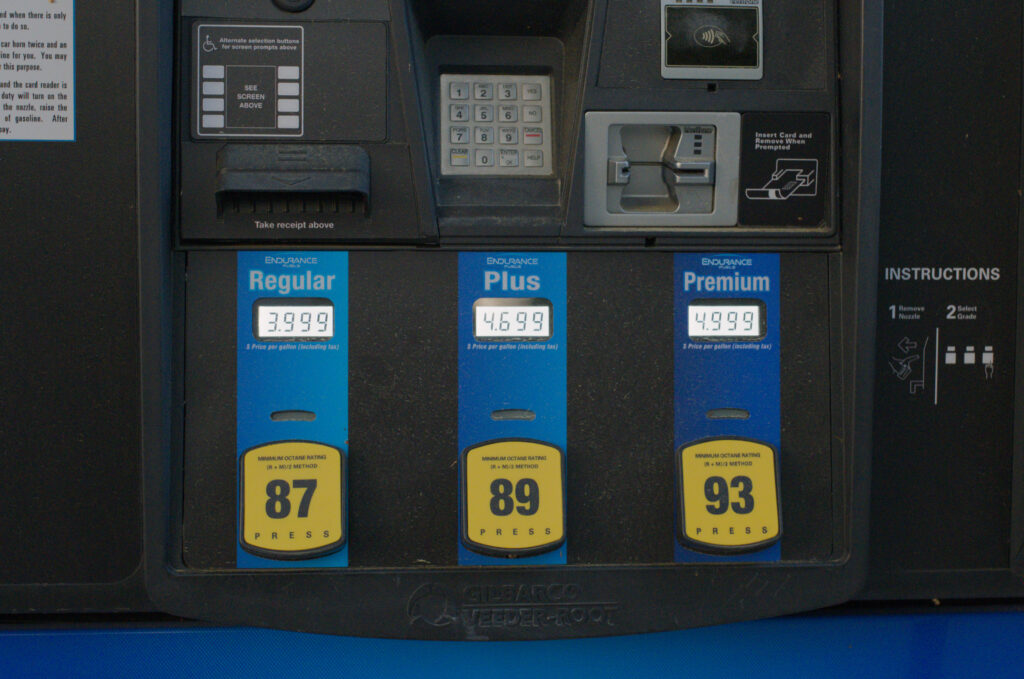
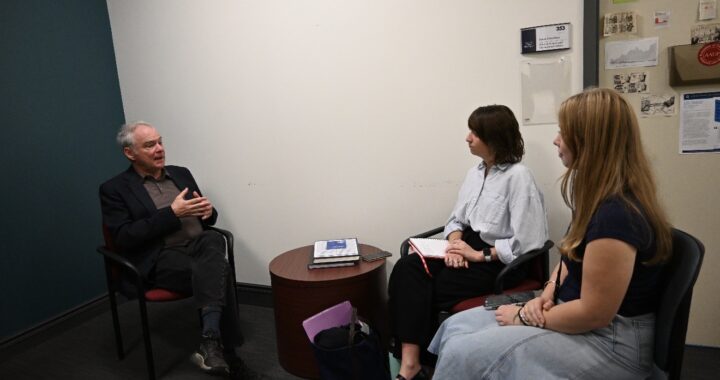
Gas prices are up to nearly $5 per gallon, affecting students who drive to and around UMW. | Violet Ayers, The Weekly Ringer
by ANN KARR
Staff Writer
Gas prices have risen dramatically in recent weeks, creating financial pressure for students commuting to campus.
Across the country, gas prices continue to rise sharply due to recent global oil price fluctuations, with the cost per gallon rising to nearly $5 in some states. According to Associate Professor of Economics Don Lee, gas prices are high because global oil supplies have been disrupted by the Iran conflict and the closure of key shipping routes, particularly the Strait of Hormuz.
“Even though the U.S. produces a lot of oil, we still pay global prices for oil,” he said. “Oil is traded on a world market, and U.S. refineries buy crude at those global prices.”
The increase in gas prices is creating more and more problems for students’ day-to-day lives.
“I’m very deeply affected by the rising gas prices,” Samantha Torres, a senior nursing major, said. “Because I’m in the nursing program, I have to travel to different hospitals as well as classes off campus.”
Torres went on to explain how the increase to nearly $5 a gallon had a drastic impact on her budget. The last time she filled her gas tank, it cost $70.
Torres said she has limited nonessential driving, though academic responsibilities make travel necessary during her final semesters in the nursing program.
“I try not to go out as much as possible,” she said. “However, with the degree that I have, it’s really hard not to.”
Torres explained that commuting has become a daily source of stress as prices continue to rise.
“I still have to get to class, and during our last semester of nursing school, we have to go to our farthest campus, which is about an hour away. So that’s gonna take a toll on my pocket money,” she said.
Like Torres, many other students are continuing to change their daily driving habits as gas costs continue to rise and put a strain on their budgets.
“I think I hold off on going to get gas a lot more than I used to,” said Quinn Davenhall, a junior marketing major. “Now I really try to push it down to the single digits of miles before I stop and go get gas.”
Davenhall continued, explaining that it’s getting increasingly difficult to find money in his budget to get from place to place.
“I’ve started walking to school more,” he said. “I don’t really drive myself to campus at all anymore.”
As a commuter‑heavy campus, UMW has many students who rely on their cars to get to classes, internships and jobs.
“I think it’s walker‑friendly for people who live on campus,” Torres said. “But it is a commuter school, so a lot of students are paying more.”
Lee explained that as the global oil prices rise, gas prices follow. These higher prices are expected to move throughout the U.S. economy by increasing transportation and production costs, ultimately affecting consumers.
“Higher oil prices raise the cost of things like diesel fuel, fertilizer, and plastics,” he said.
Singh explained that global uncertainty surrounding the conflict has played a major role in driving prices higher. He said the disruption of the Strait of Hormuz, which is a critical oil shipping route through which about 20% of the world’s petroleum typically passes through.
“When a conflict breaks out in a place where oil is produced, refined, or shipped, like the Persian Gulf, every producer and consumer is eventually affected worldwide,” Singh said.
According to Singh, gas prices are likely to remain elevated as long as the Iran conflict continues and the Strait of Hormuz remains disrupted.
Lee said that even if the conflict is resolved soon, prices would likely stay high for several months before stabilizing.
Lee explained that commuter students are impacted the most, but non‑commuter students also feel the effects as higher transportation costs increase the prices of consumer goods.
“More students will likely work additional hours to cover higher costs,” Lee said. “That leaves less time for coursework and increases the risk of academic decline.”
As gas prices stay constantly high, UMW students continue to adjust to the financial strain. Commuter students face higher transportation costs, while non‑commuter students still feel the effects when trying to get from place to place. As long as global disruptions continue, rising costs are going to remain a huge challenge for students across campus.