Debt from UMW Foundation investments continue to harm finances decades later
5 min read
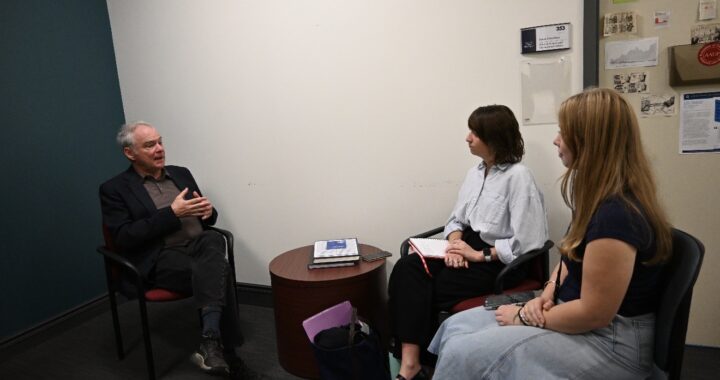
The UMW Foundation is the non-profit branch of the university that handles its assets and several scholarships. In the past, the organization was also responsible for acquiring and developing real estate assets for the University. | Abbey Magnet, The Weekly Ringer
by EMMA KINGKEO, MEAGHAN VAN DYKE, AMANDA SHEWARD AND AVA NJORE
Associate Editor, News Editor and Contributing Writers
The University of Mary Washington Foundation, a nonprofit fundraising organization of the school, made a series of “poor” real estate decisions several years ago, and the university is still feeling the impact, according to the Joint Legislative Audit and Review Commission.
These decisions have resulted in the school becoming somewhat of an anomaly, according to the Commission, because most colleges benefit financially from their foundations, while UMW’s holds it back.
“I think Mary Washington was the only school where, when we included the Foundation in terms of its total financial footprint, that it actually looked worse,” said Justin Brown, senior associate director of JLARC, referring to a recent viability report on state higher education institutions. “All the other schools looked better.”
While the UMW administration declined to comment, it did provide a four-page response to JLARC by UMW President Troy Paino.
Paino said that UMW was aware of the challenges but was already in the process of rectifying the damage. He said that the Foundation was planning to sell two pieces of property and liquidate other real estate properties that could potentially help eliminate its debt.
“With these changes related to the Foundation’s real estate portfolio, the Foundation is entering a new chapter of evolution,” Paino said. “Beginning in July 2023, the Foundation board initiated a strategic restructuring to refocus their efforts on strengthening the University’s financial position and help to grow its philanthropic resources. The culmination of that work is the elimination of their private debt, an endowment which will cross the $100M mark and even greater strategic alignment with the University.”
The JLARC report did not specify which real estate purchases it deemed “poor,”, but a look into the Foundation’s documents provides some answers.
The UMW Foundation is a nonprofit that oversees the university’s private assets—including donated gifts and investments—while also engaging in real estate acquisition, development and operations on behalf of the institution, according to its website.
In 2007, the UMW Foundation acquired Eagle Landing, an apartment-style student dorm building located across Route One, for $18.75 million at the request of the Board of Visitors. In the first year it was opened, all its rooms were filled.
In 2008, the Foundation purchased a single-family home on Williams Street, valued at $400,000 in April of that year. The house was intended to be transformed into an office space for the Foundation away from the Jepson Alumni Executive Center, according to an article published by The Weekly Ringer; however, it was converted into office space for UMW Athletics instead. Instead, the Foundation moved into an executive office located on Emancipation Highway constructed in 2010.
That same year, the UMW Foundation and the UMW Real Estate Foundation merged, according to statements in a Form 990, which all nonprofits are required to submit annually to maintain their tax-exempt status. According to a 2009 blog post by the UMW Foundation Project, which appears to have been run by the UMW Foundation, the purchase was possible through a loan secured during the Great Recession.
According to the Foundation’s Form 990 in 2008, the Foundation’s total assets increased by $91,504,655. However, that same year, the Foundation’s total liabilities also increased by $99,072,419.
In 2010, the Foundation also purchased the nearby Pizza Hut and a residential home on Thornton Street, according to an article published by The Weekly Ringer.
In addition to the houses, Pizza Hut and Eagle Landing, the Foundation also constructed a pedestrian bridge over Route One in 2010. In 2012, the Foundation also renovated a hotel within the Park and Shop Plaza with Hyatt and 600 acres of undeveloped land in Stafford County, according to the Foundation’s real estate portfolio.
The pedestrian bridge, the park and shop plaza, the parking garage and mixed-use commercial complexes were purchased using private financing, according to the Fredericksburg Free Press.
These real estate decisions have recently received greater scrutiny because of the JLARC report released in October, which said that UMW was one of three Virginia public universities that had some viability risk.
The report cited said the school faces “substantial risks related to its pricing power, facility conditions and financial health ratios” due to declining enrollments and infrastructure that needs significant upgrades. However, the Foundation’s financial actions were impactful enough to raise the risk rating independently due to “poor investment decisions.”
“It should be noted that Mary Washington would have less financial risk if its foundation’s liabilities and expenses were not included when calculating financial ratios,” the report states. “Without these liabilities in the financial ratio calculations, the school would have had a moderate, instead of substantial, risk rating on its financial strength metric.”
Many colleges have nonprofit, tax-exempt foundations dedicated to raising funds that support the institution’s mission. As legally separate entities, they have greater flexibility in receiving, managing and investing donations to benefit the school.
Over 15 years after the Foundation’s acquisition of Eagle Landing, the public remains largely in the dark about what exactly led to the financial decisions made by the Foundation and what caused the debt to accrue so significantly. Eagle Landing remains a student housing option at UMW, currently priced at $6,542 per semester.
Despite several attempts to request information from the University, including an unsuccessful Freedom of Information Act, the Foundation and University failed to directly comment on the Foundation’s real estate decisions. After multiple attempts at reaching representatives from the Foundation for comment, information requests were redirected to University Communications, who responded to a select few questions with information that was already accessible to the public.
According to the Board of Visitors meeting minutes for their October 2024 meeting, the Board acknowledged the publication of the report.
According to a Fredericksburg Free Press story published in 2024, the UMW Foundation has shifted its focus from buying and developing real estate to managing the University’s assets and administering the hundreds of scholarships awarded to UMW students each year.
Today, on the Foundation’s website, a quote from Former Chairman of the Board Florian “Red” Hofer can be seen on the first page of the loading screen, amidst the changes made to keep up with years of debt reflected in the JLARC report: “We have one client, and that is the University of Mary Washington.”