Gifted Education should be crucial to UMW’s COE
4 min read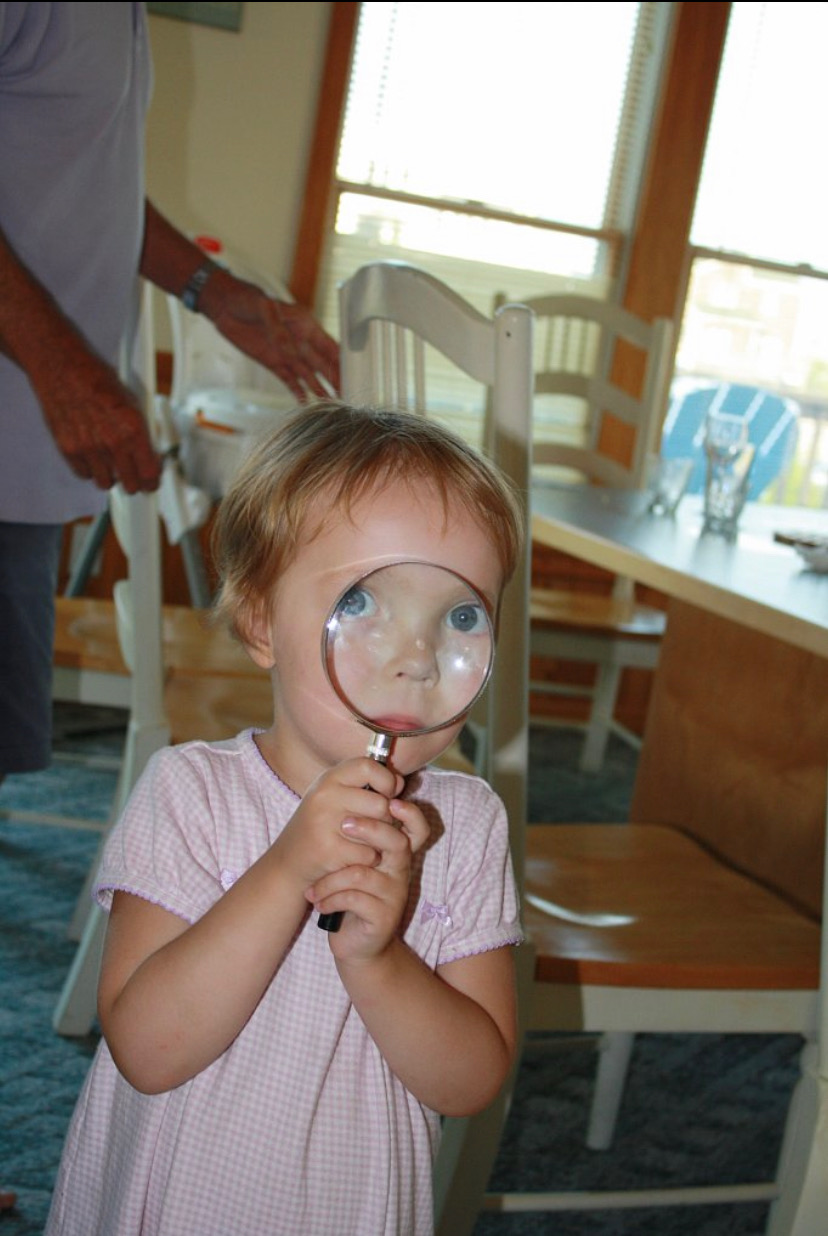
An inquisitive mind should be nurtured and allowed the space to transform in a classroom setting. | Anna Hayes, The Weekly Ringer
by ANNA HAYES
Staff Writer
As a former Elementary Education major, my days consisted of classes on learner development, educational theories and practicums where I observed and assisted actual teachers. One main theme across all of these experiences was the importance of creating an inclusive classroom environment for students.
But our curriculum wasn’t completely inclusive. I couldn’t help but notice something missing from UMW’s curriculum for students pursuing a career in teaching: the College of Education and Human Development does not offer a course on Gifted Education.
According to the Virginia Department of Education, the Commonwealth had over 192,000 gifted students in the 2024-25 school year. Almost 7,000 K-12 public school students around UMW are enrolled in gifted programs. UMW’s COE needs to prepare future teachers to serve these students.
My nephew, a fourth grader, is one of those students. He is considered twice exceptional, or a student identified as both disabled and gifted. He has an Individualized Education Plan (IEP) under federal law for his disability, but he also receives gifted education services.
His mom, Kelsie Hayes, recounts her experiences with his education so far. He qualified for an IEP very early on in his school career, during Head Start, an early childhood education program. He wasn’t recognized as gifted until testing in second grade, but due to his “social-emotional quirks,” he did not join the gifted program until this year, at the beginning of fourth grade.
Hayes said he has not only been achieving better grades, but “he’s more than ever talking to me about what he’s learning in school, and that’s really exciting for me.”
After experiencing firsthand how much the gifted program has benefited her son, Hayes recognizes the importance of training teachers in gifted education.
“If teachers were trained in different curriculum, learning processes or ways of teaching I think that would definitely help,” said Hayes. “I do think that more specialized teaching is needed for them so that it can be in their toolkit.”
All UMW education students must take a class on special education (SPED), which goes over laws, identification of different disabilities and teaching strategies to help students who receive special education services.
Brooke Powell, a professor in the department of education and a former SPED teacher, has had previous experience teaching a gifted student despite not having any gifted education training.
“My one SPED student was twice exceptional. So I didn’t have that background of gifted, you know, so I had to figure it out myself,” Powell said. “You need to have that differentiation piece of higher-level thinking. So I do think it could be beneficial to have some gifted training.”
Another professor from the College of Education, Susan Pearson, agreed that a gifted education course would benefit UMW’s future teachers. “Even if it’s a one-credit elective,” she said.
Laura Van Dyk is a gifted resource teacher in nearby Stafford County. Her school works in partnership with UMW to host COE practicum students. She has six years of experience in gifted education and nearly 20 years of experience teaching.
Van Dyk recognizes the importance of gifted training for future teachers in creating inclusive classrooms.
“Providing future educators with specific trait recognition and differentiated strategies is essential for continuous academic progress for gifted students within inclusive classroom environments,” she said.
Despite the clear need for a course on gifted education, UMW may struggle to develop one due to the lack of state or federal standards.
The VDOE requires all Virginia public schools to provide instructional services to meet the needs of gifted students, but how those needs are met and what exactly these programs offer is up to each individual school division.
My nephew’s gifted program in Newport News differs greatly from the gifted program in Stafford County, which differs from the York County gifted program I was in as a child. Each school division also has different training requirements for gifted education teachers.
This doesn’t eliminate the need for teacher training in gifted education; rather, it highlights a systemic issue and the need for the VDOE to better define and regulate gifted programs in order to make them more equitable across Virginia.
Many people have misconceptions about what gifted education actually is. Common misunderstandings suggest that gifted education is unnecessary or superfluous.
According to Van Dyk, many traits common among gifted students can actually inhibit their learning and grades, such as requiring deeper inquiry, perfectionism and intense rule compliance. Common misconceptions of gifted education don’t recognize the unique struggles gifted students often face.
Skeptics of gifted education also criticize evaluation practices, claiming they are racially, culturally or linguistically biased. Van Dyk said that to combat potential biases, all students are universally screened in 2nd grade.
She also works with the school’s English for Speakers of Other Languages (ESOL) team in order to create more equitable testing outcomes by translating family communications, interpreting testing instructions and adapting portfolio tasks.
A UMW course on gifted education could further reduce misconceptions and skepticism. As for what might be included in a new course, many different aspects should be covered in order to provide a comprehensive overview of gifted education.
Van Dyk suggests the incorporation of the history of gifted education as well as an overall evaluation of gifted learners. Common academic and social-emotional characteristics of gifted learners should be understood, and most importantly, a toolkit of instructional skills and strategies should be implemented to help differentiate teaching for gifted learners.
These skills developed in a UMW course would benefit the experiences of UMW’s future teachers, their students and parents by creating a more inclusive education for gifted and twice exceptional learners.