Personal Essay: Remembering the life of Gloria Steinem and the generational legacy she left for women in the newsroom
5 min read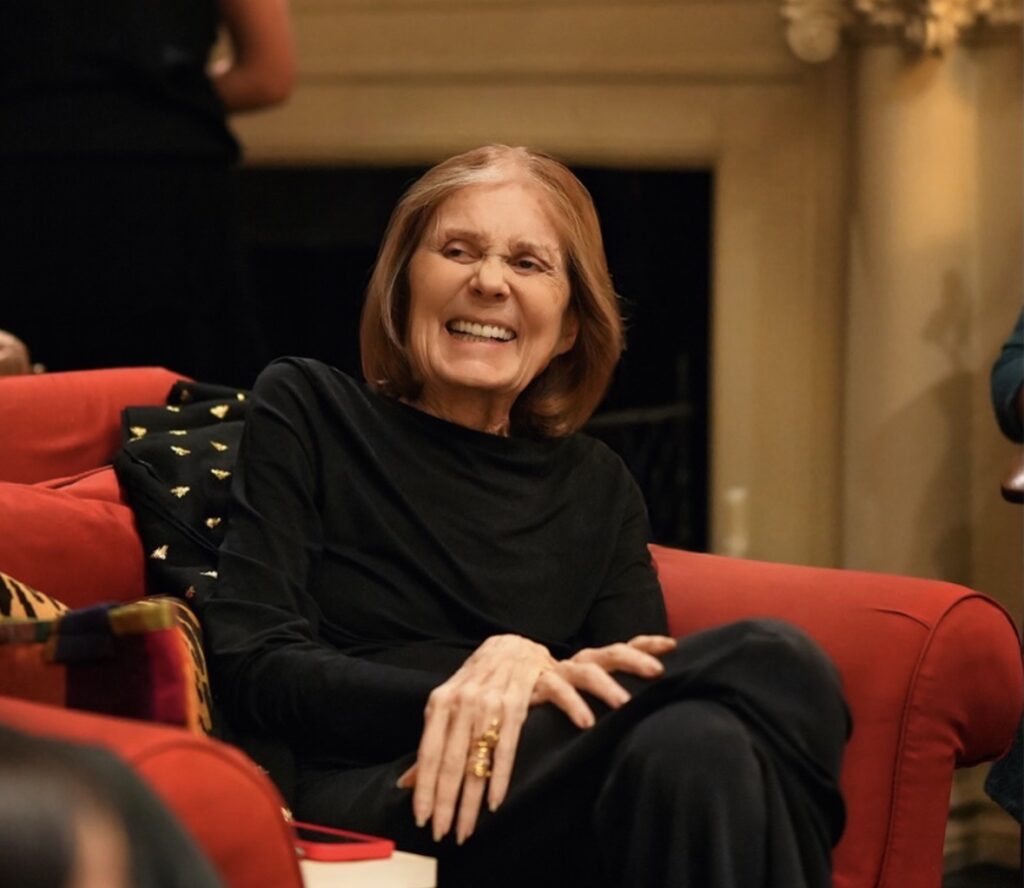
Gloria Steinam left a permanent mark on the field of journalism. | Instagram / @gloriasteinem
by MEAGHAN VAN DYKE
News Editor
The day Gloria Steinem died, I got a text from my aunt in Baltimore with a link to an article announcing the news and a separate message a few minutes later:
“Congrats on your new role as editor! Will your paper cover Gloria Steinem’s passing? She was a ‘shero’ of Grandma Mary and mine and I’d be interested to see your paper’s coverage.”
This didn’t surprise me in the slightest. My grandmother, who marched in Chicago civil rights protests and collected heaps of Ms. magazines, seemed like the poster child of the average Gloria Steinem fan, the journalist who spent her entire life fighting for gender equality.
When I was younger, she used to ask for mailed-in copies of the newspapers I wrote for my family that I called The Van Dyke News. When I would become a journalist, she told me she would call me the “golden grandchild” the day she got to read my name in print. Until she died, she did everything in her power to teach me that the only thing holding me back from achieving everything I wanted was my own will and ambition, not my gender identity.
The only reason I’m able to write an article like this in the first place is because of people like Gloria Steinem.
When Steinem first started in the journalism field, she, like a majority of female reporters, was given stories on what was largely known as the “women’s pages,” or pages that more heavily focused on fashion, lifestyle and more “traditionally feminine” topics. According to the National Women’s History Museum, Steinem once pitched a political story to The New York Times Sunday Magazine and was told by her editor, “I don’t think of you that way.”
Even as I looked back at the archival pages of The Weekly Ringer’s predecessor, The Bullet, most of the articles were more lifestyle-oriented. More “hard-hitting” news came after the university became co-ed in 1970 and even then, a majority of these stories were written by men.
Still, a majority is not all.
Steinem had her first breakthrough in her late 60s with her piece “A Bunny’s Tale,” published in Show magazine. The investigative article followed Steinem in her journey through the Playboy Club, exposing the sexism and poor conditions that sex workers in the Playboy business faced.
After that, Steinem spent her life building a portfolio of work dedicated to uniting women of all socio-economic, racial and ethnic backgrounds towards a common goal. The goal, Steinem explained in her final essay, published in The New Yorker, was for every person’s “full-humanity” to be acknowledged, regardless of their race, ethnicity, gender identity or socio-economic background.
And even though they are buried behind other names in lower headlines on the page, The Bullet still carries the name of its early female reporters under the most influential event coverage at our university.
I must admit, one of my favorite study motivators when I’m procrastinating or feeling discouraged in any class, journalism or otherwise, is to look up edits of women in journalism on TikTok. Most of these women who first come up—Joan Didion, Gloria Steinem—have a certain appeal to me. They’re like foremothers, people who faced harassment and assault (things I don’t know if I would be brave enough to storm) and saw their name published in print anyways.
Even the writers in the early editions of The Bullet, writing under a column titled “Inquisitive Reporter Asks,” talking to professors who dismissed their all-female students as “not attractive enough” or “too goofy” (according to a real piece published in a 1946 edition of The Bullet), speak to me. To me, they are saying, “Look what I have accomplished. In the face of a world that wants me to be a certain way or serve a certain purpose, I have still done it.”
When I look around our now female-dominated newsroom, I can’t help but feel we’ve taken these inklings of our foremothers clawing their way into these rooms and are now able to make something beautiful from it.
Outside the student-journalist world at UMW, women were still denied opportunities and privileges in our then all-women’s college, a space that was thought to be pretty progressive only 50 years ago, when women were discouraged from even going to college.
According to student handbooks, women were only permitted to wear skirts or dresses to classes for decades. Old yearbooks had pictures of house mothers who enforced strict curfews and visiting policies, and the university itself was exclusively a teaching college for several years.
Still, Steinem wasn’t perfect. That’s why today, the women of Mary Washington stand in a unique position. With the rise of conversations around trad wives on social media and the reversal of women’s healthcare decisions such as Roe v. Wade, college-age women hold so much future decision-making power in their hands. I am among those, as bosses and older family members often tell me, who have the daunting fate of spinning headfirst into a future no one can yet identify.
In her final essay, Steinem writes, “When you’re lucky enough to live a long life, as I have done, your role as an older person is to remind us how far we have come.”
Each and every one stands on the unfulfilled dreams of the women before us. There are stories, even if they’ve been lost in our family lines, of dreams of being scientists or writers that were squashed by lack of opportunity mixed with the expectations of a patriarchal society.
When I lost my grandmother in the summer of 2020, my father found a stack of newspapers from when I was younger by her bedside. Years later, she had still kept them.
While my grandmother, a fierce feminist herself, lived her life working her dream job as a librarian in Chicago, this insistence that I pursue my dreams in what is still a very male-dominated field feels to me like one generation passing the foundations of a torch to the next. She never got to see my name in print, but the promise of it was enough to satisfy my grandmother that her work, and the work of women like Steinem, would not die with them.
All of us women, regardless of what college or field of study we’re in, have the unique opportunity now to seize careers that weren’t even considered possible. Just being here, failing that one test or dragging ourselves to the 8 a.m. lecture, is taking the opportunities fought tooth and nail for by the women before us, dreaming of even being accepted into college.
It is why, for Steinem, my grandmother and the countless other women whose work has gone into getting me where I am today, that I write.